
Why could ancient iron furnaces produce a solid bloom instead of liquid iron?
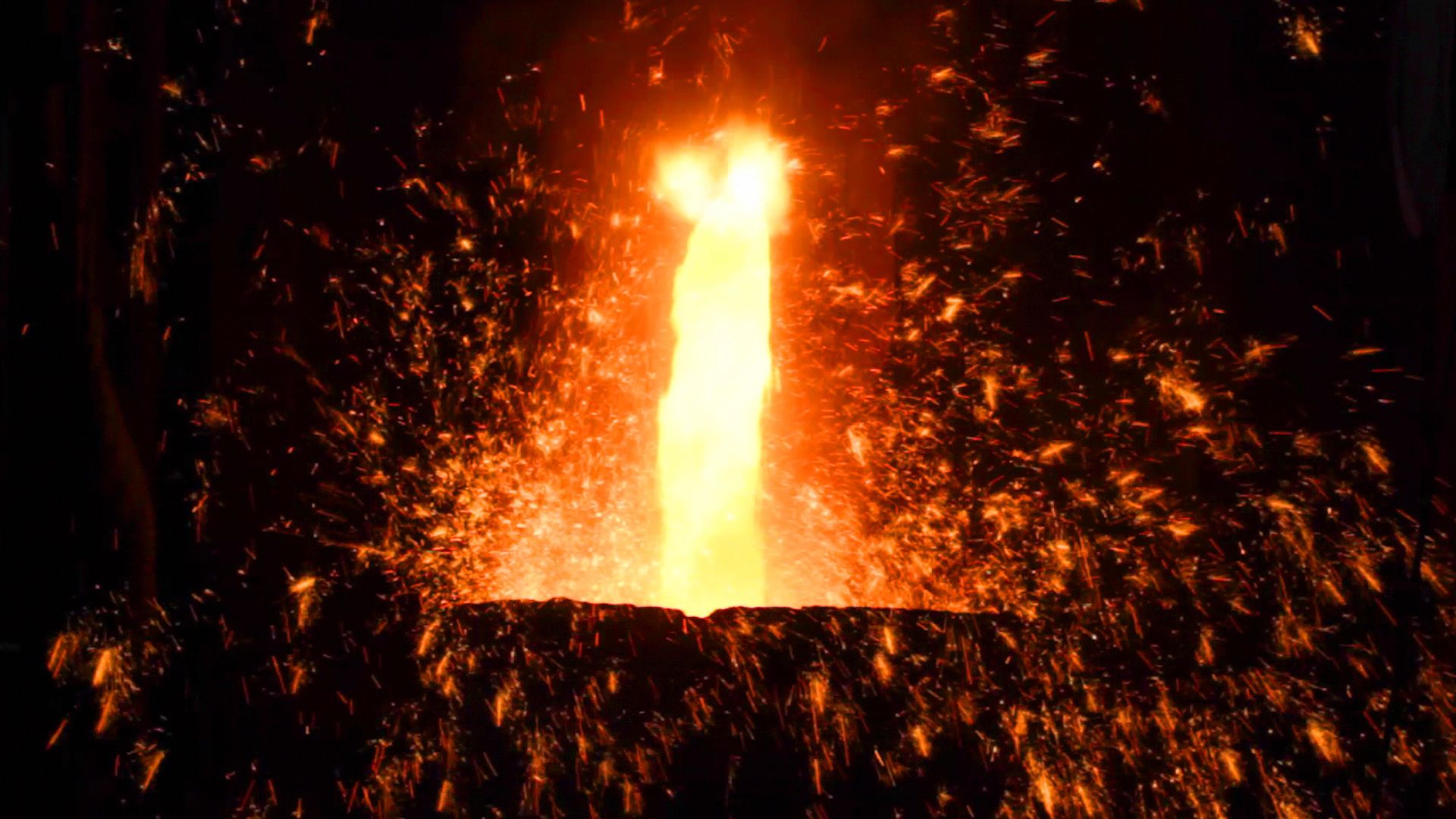
Ancient iron furnaces produced a solid bloom rather than liquid iron because they were incapable of reaching the high temperatures required to melt the metal.12
The melting point of pure iron is approximately 1,540 °C (2,800 °F), whereas primitive furnaces—such as bowl or shaft furnaces—could typically only reach temperatures up to about 1,150–1,200 °C (2,100–2,200 °F). Because the iron could not reach a liquid state, the chemical reduction of the iron ore resulted in a spongy, solid mass of pasty metal globules intermingled with semiliquid slag and pieces of charcoal.231
This product, known as a bloom, required extensive post-processing. To create usable wrought iron, smiths had to repeatedly reheat the bloom and hammer it while hot to expel the entrapped slag and consolidate the metal.123