
Britannica
Sources used in this answer
Why can unevenly distributed weight make a ship heel or trim?
Created from Britannica articles
using AI.
AI can make mistakes, so verify using Britannica articles.
naval architecture
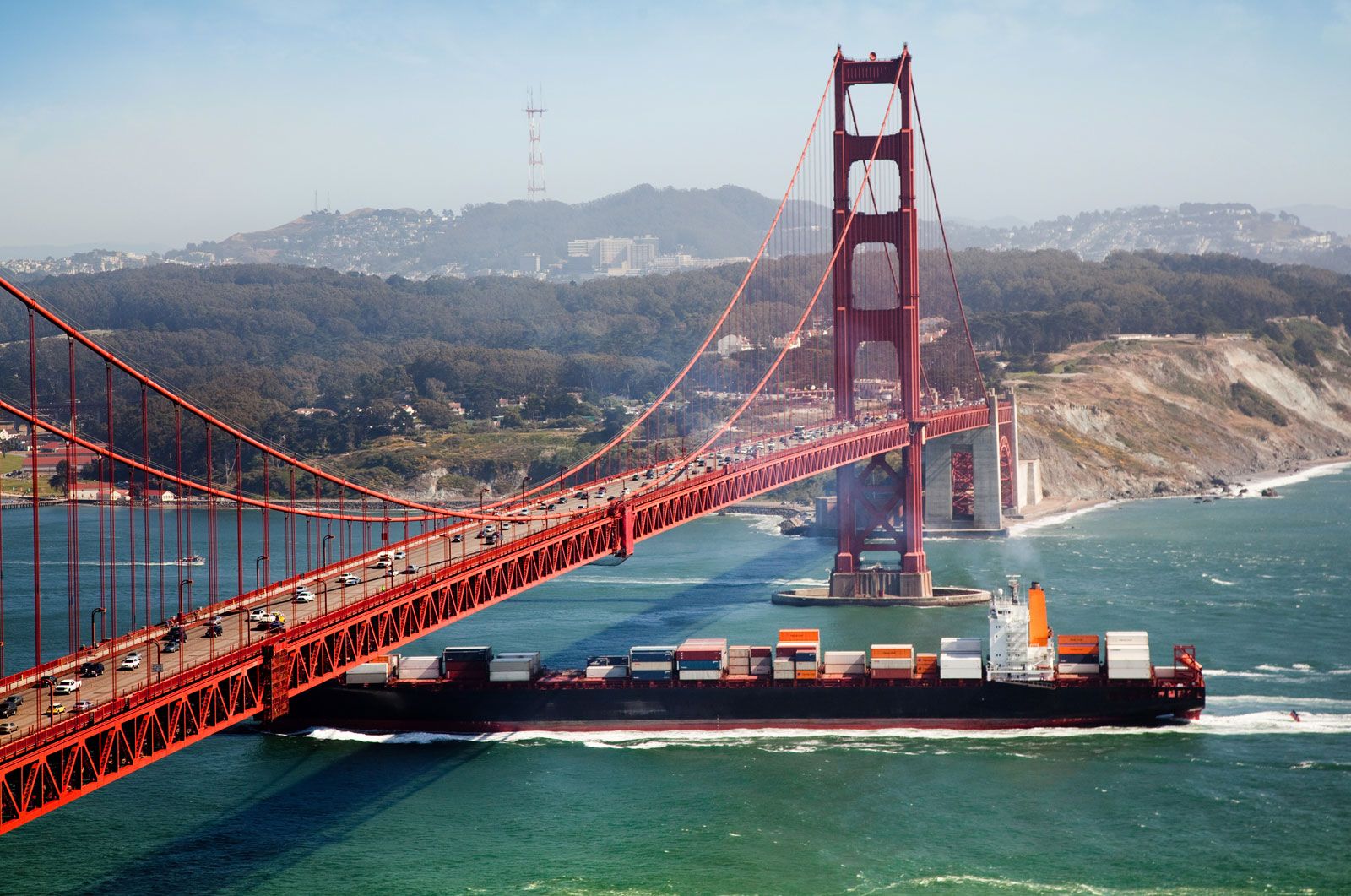
A cargo ship passing the Golden Gate Bridge, near San Francisco.
In naval architecture, a ship’s orientation is governed by the balance between its total weight and the buoyancy forces acting upon it. For a vessel to float level and upright, the collective first moment of all weights must equal the first weight moment of the water displaced.12
When weight is distributed unevenly, the ship will incline to reach static equilibrium:
- Heel (sideways inclination): This occurs when weight is placed at a distance from the ship's centerline. The resulting upsetting moment causes the vessel to tilt until it is countered by a righting moment, which is determined by the relationship between the centre of gravity and the metacentre.13
- Trim (endwise inclination): This occurs when there is a longitudinal imbalance in weight distribution relative to the center of buoyancy. Because buoyancy forces vary from bow to stern, loading cargo disproportionately at the ends or in the middle creates uneven moments that force the ship to tilt forward or backward.142
Maintaining precise weight distribution is essential, as excessive heel or trim can reduce stability, hinder operations, or even cause structural damage.14