
- fuel cell - From chemical energy to electrical energy
- solar cell - Solar cell structure and operation
- energy conversion - Varying degrees of conversion in real systems
- thermodynamics - Entropy and efficiency limits
- thermal-heat recovery
- coal utilization - Advanced combustion technologies
- solar energy - Thermal energy
Why can solar cells and fuel cells avoid an intermediate heat-conversion step?
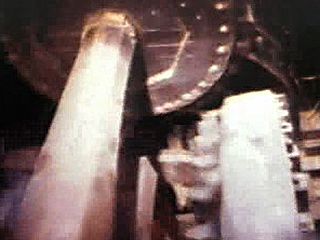
The ingenuity people used in harnessing waterpower can be seen in this medieval-style mill. The waterwheel is turned by a stream and is connected to a shaft that leads into the building. At the other end of the shaft is a gear. The connection of a series of gears translates the power from the stream to a shaft that drives a millstone, which grinds flour from grain.
(30 sec; 1.84MB)
Solar cells and fuel cells are able to avoid an intermediate heat-conversion step because they convert energy directly into electricity, bypassing the thermodynamic limitations inherent in heat engines.12
In conventional power generation, such as internal-combustion engines or steam turbines, fuel is burned to produce thermal energy, which is then used to perform mechanical work. According to the second law of thermodynamics, the conversion of heat into directed energy is fundamentally limited by the temperatures at which heat is added and exhausted, making 100 percent efficiency impossible.134
In contrast:
* Fuel cells convert chemical energy directly into electrical energy through electrochemical reactions at the electrodes, avoiding the combustion process and the associated heat-to-work conversion cycle.1
* Solar cells utilize the photovoltaic effect, where light energy directly excites electrons in a semiconductor to create an electric current, rather than relying on the collection of thermal energy.2
By eliminating the intermediate step of generating heat, these technologies avoid the efficiency losses dictated by the Carnot limit, allowing for significantly higher energy-conversion efficiencies.134