
Why can no heat engine convert all of its heat into useful work?
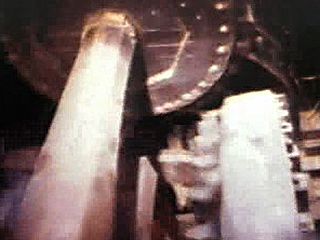
The ingenuity people used in harnessing waterpower can be seen in this medieval-style mill. The waterwheel is turned by a stream and is connected to a shaft that leads into the building. At the other end of the shaft is a gear. The connection of a series of gears translates the power from the stream to a shaft that drives a millstone, which grinds flour from grain.
(30 sec; 1.84MB)
No heat engine can convert all of its absorbed heat into useful work because doing so would violate the second law of thermodynamics.12
A heat engine operates in a cycle, absorbing heat () from a high-temperature reservoir and exhausting waste heat () to a lower-temperature reservoir. According to the conservation of energy, the work performed () is the difference between these two values ().132
For an engine to achieve 100% efficiency, it would need to exhaust zero heat (). However, the second law of thermodynamics dictates that the net change in entropy for the system and its reservoirs must be greater than or equal to zero. If were zero, the net entropy change would be negative, which is physically impossible. Consequently, some portion of the absorbed heat must always be discharged as waste heat to the environment to maintain the required entropy balance.132