
Britannica
Sources used in this answer
Why are gyrocompasses unaffected by nearby steel structures?
Created from Britannica articles
using AI.
AI can make mistakes, so verify using Britannica articles.
gyrocompass
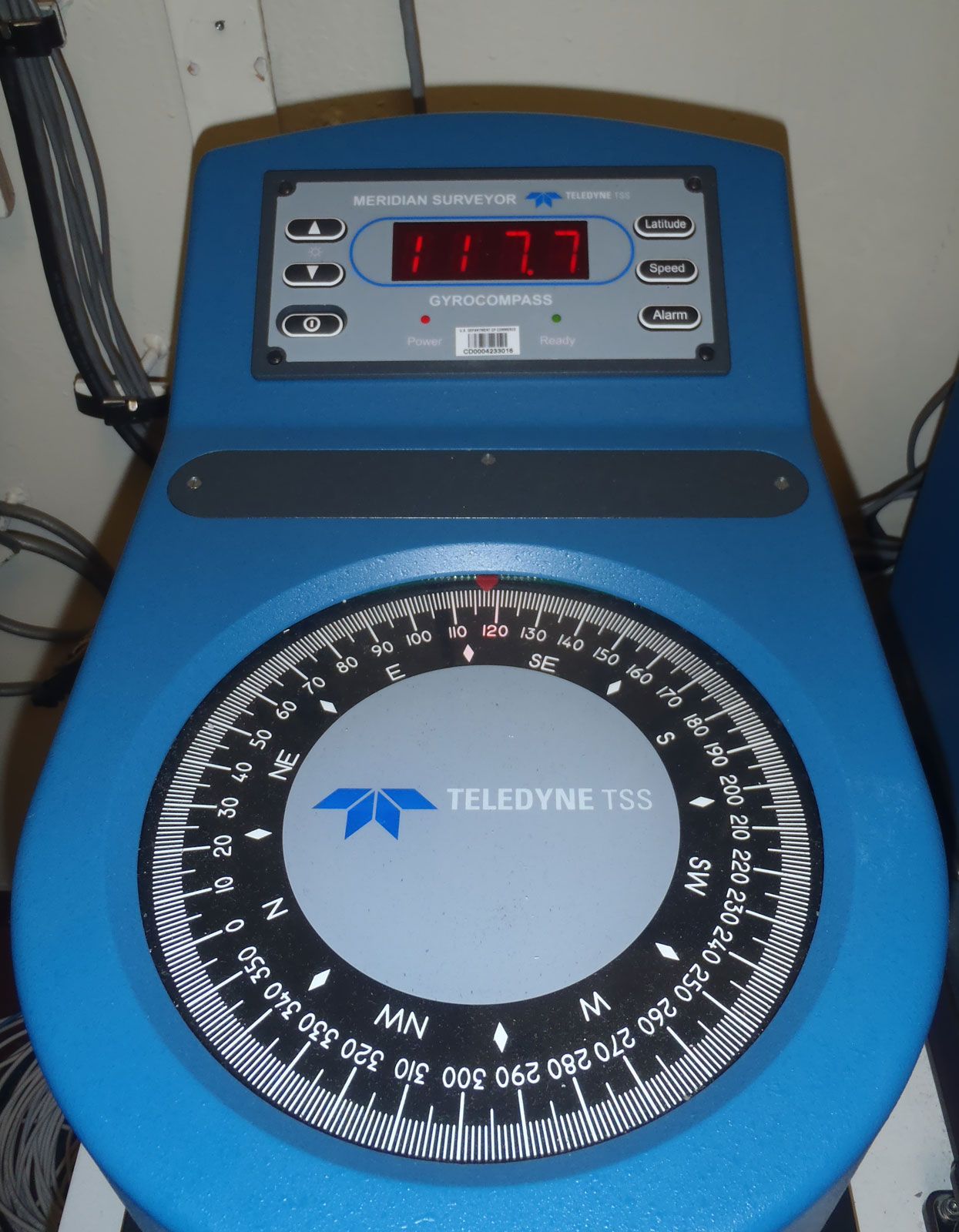
The gyrocompass aboard the National Oceanic and Atmospheric Administration's (NOAA) ship Rainier. Gyrocompasses are navigational instruments that use a continuously driven gyroscope to accurately seek the direction of true (geographic) north.
A gyrocompass is unaffected by nearby steel structures because it does not rely on magnetic principles to determine direction. Unlike a magnetic compass, which aligns itself with the Earth's magnetic field and is therefore susceptible to interference from metal, ore deposits, or electric circuits, the gyrocompass operates using a continuously driven gyroscope.1
The gyrocompass functions by seeking an equilibrium direction based on the combined effects of gravity and the rotation of the Earth. Because its north-seeking property is derived from these physical forces rather than magnetism, it remains immune to the magnetic deviations caused by steel structures, making it a reliable navigational instrument for ships and submarines.1