
Britannica
Sources used in this answer
Which devices allow users to see and interact with a virtual reality environment?
Created from Britannica articles
using AI.
AI can make mistakes, so verify using Britannica articles.
virtual reality
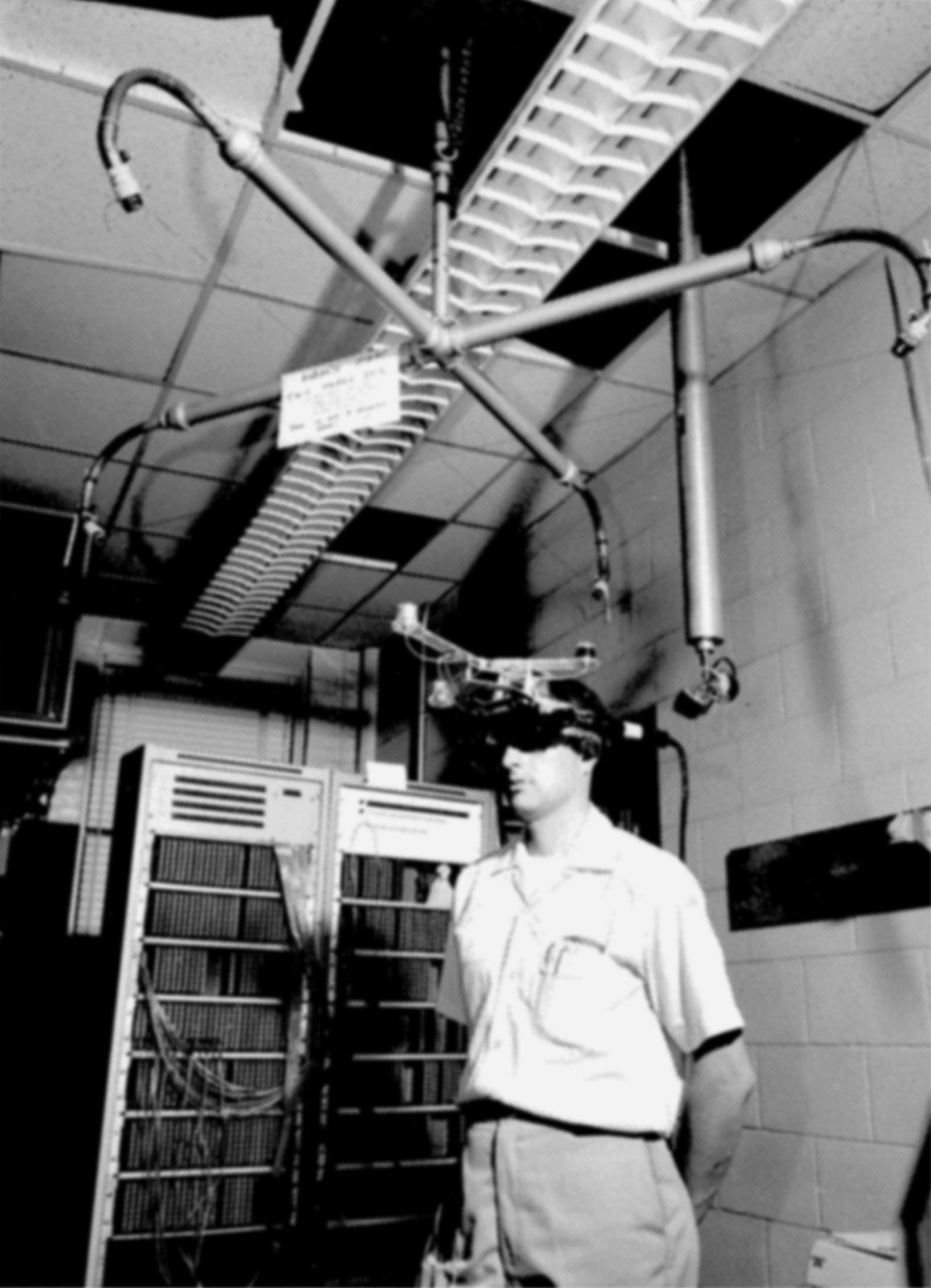
Early head-mounted display device developed by Ivan Sutherland at Harvard University, c. 1967.
In virtual reality (VR), users interact with artificial, three-dimensional environments through specialized hardware that simulates sensory experiences. To see and interact with these virtual spaces, users typically employ the following devices:
- Head-mounted displays (HMDs): These are goggles or helmets equipped with stereoscopic screens that provide a 3-D visual environment. Many HMDs include motion sensors that track the user's head movements, allowing the system to adjust the displayed images in real time to match the user's perspective.12
- Interaction devices: To manipulate objects within the virtual environment, users utilize various wearable or handheld tools. These include:
- Data gloves: Often equipped with force-feedback technology, these allow users to reach out and "touch" or manipulate virtual objects.1
- Controllers: Handheld devices used to navigate and interact with the environment.3
- Body suits: Wearable gear that can provide sensory feedback across the body.1
- Haptic devices: These systems provide tactile feedback—such as vibration, pressure, or temperature—to enhance immersion. Beyond gloves and controllers, haptic-enabled vests and other wearable technology allow users to physically feel actions and interactions within the virtual world.3