
Britannica
Sources used in this answer
What particle sizes of iron ore are suitable for blast-furnace feed?
Created from Britannica articles
using AI.
AI can make mistakes, so verify using Britannica articles.
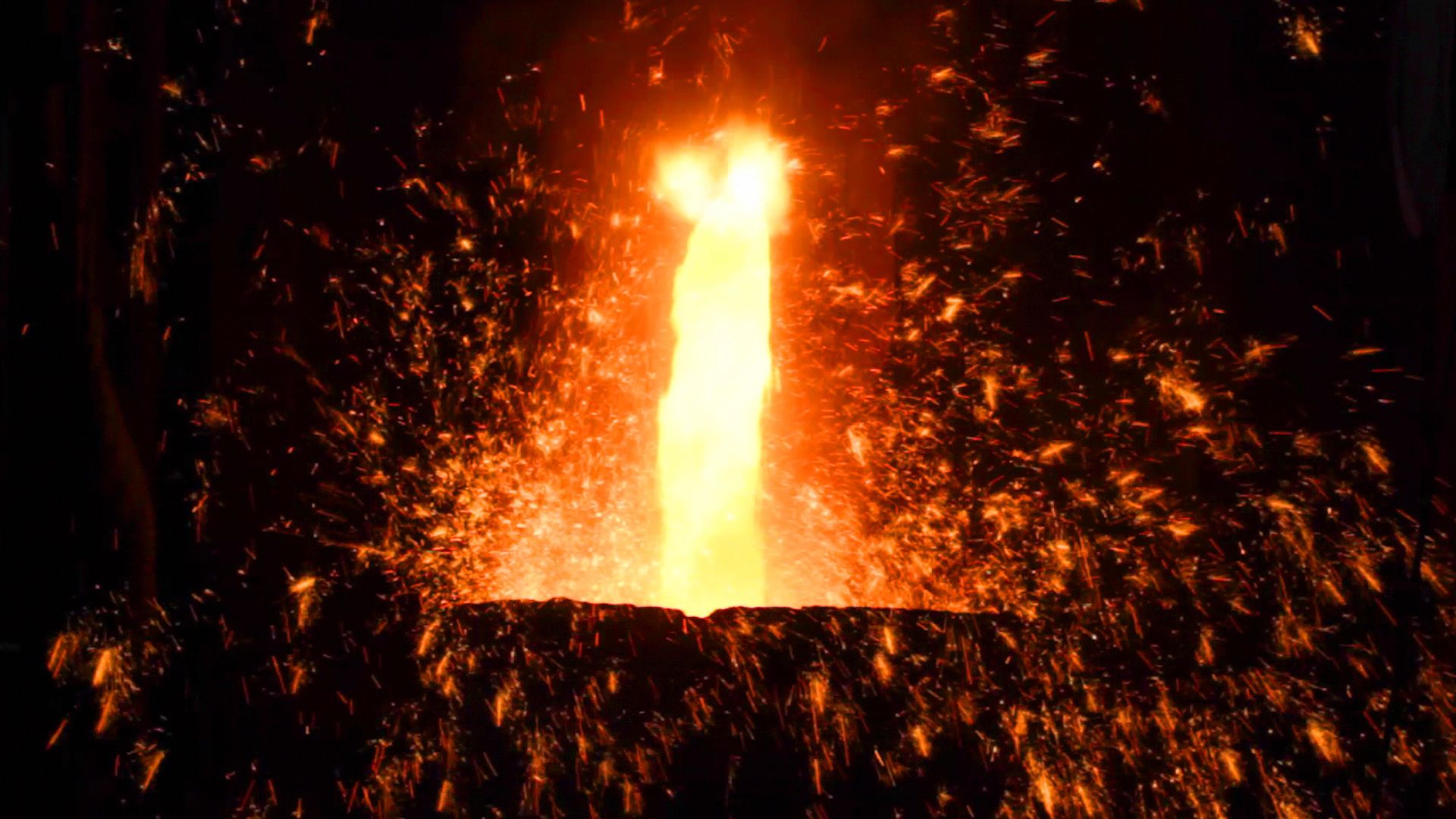
iron processing
Iron ore is one of the most abundant elements on Earth, and one of its primary uses is in the production of steel. When combined with carbon, iron changes character completely and becomes the alloy steel.
In the context of iron processing, the blast furnace requires ore particles to be within a specific size range to ensure efficient operation.
- Optimal Size: The blast furnace requires lumps between 7 and 25 millimetres.1
- Importance of Uniformity: A significant advancement in 20th-century iron making was the shift from using randomly sized ore to evenly sized charges, such as sinter and pellets. Narrowing the range of particle sizes allows the charge to descend regularly without sticking, as it promotes more even gas flow and enhances contact between the gas and the descending solids.2
- Handling Fines: Ore particles smaller than 7 millimetres are classified as fines. Because these cannot be charged directly into the furnace, they must be agglomerated through processes like sintering, where fine particles are fused into larger, suitable lumps.13