
Britannica
Sources used in this answer
What are the main differences between post-and-lintel construction and arch construction in stepwells?
Created from Britannica articles
using AI.
AI can make mistakes, so verify using Britannica articles.
stepwell
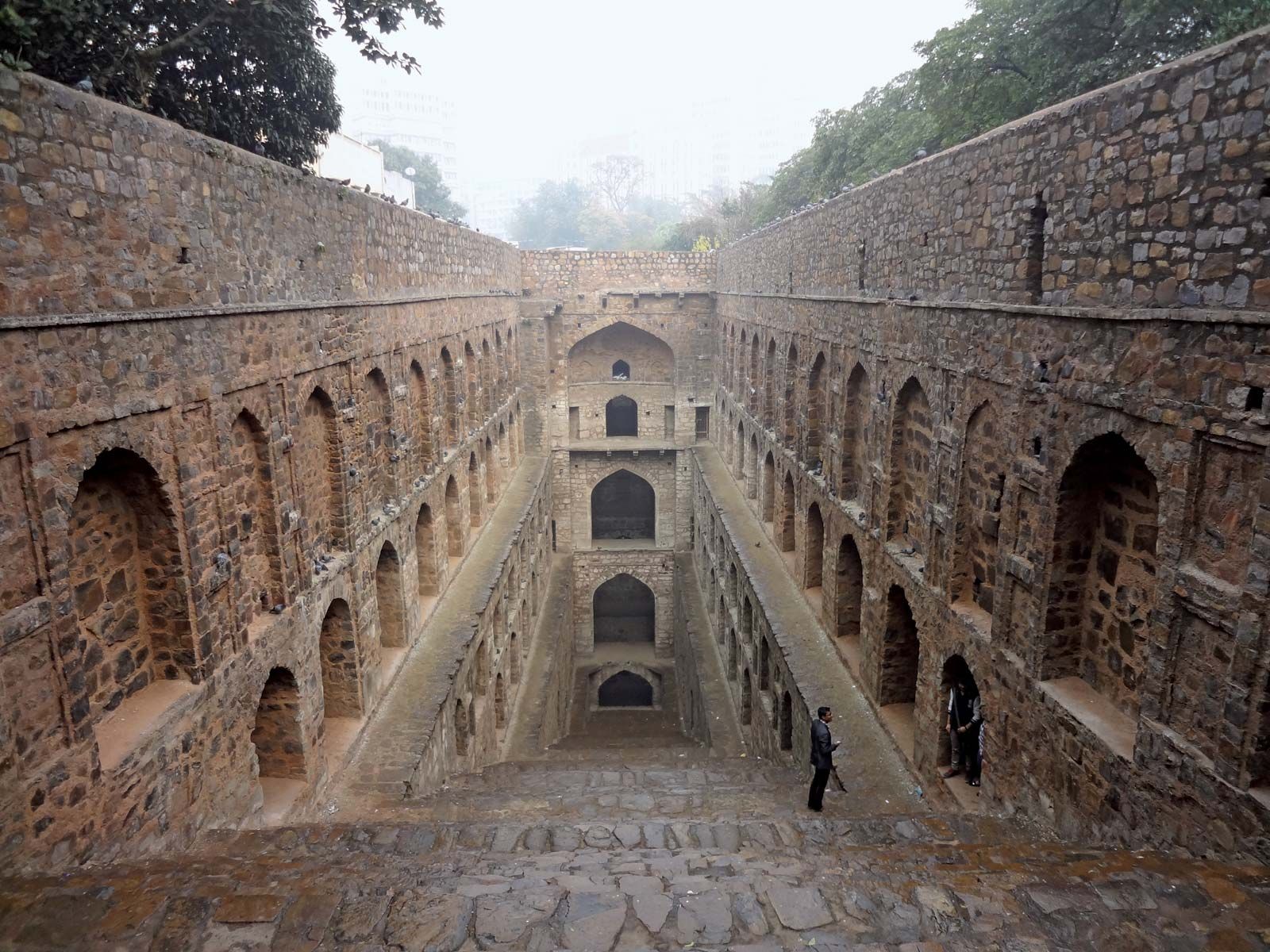
Agrasen ki Baoli, Delhi, India.
In the context of stepwell architecture, the primary difference between post-and-lintel and arch construction lies in their structural methods and historical association with different cultural traditions.
- Post-and-lintel (Trabeated) Construction: This method, which uses upright columns to support horizontal beams or lintels, was the standard technique employed by Hindu builders. It is a fundamental system where the load is transferred vertically through columns. In stepwells, this style was often accompanied by corbelled domes and featured elaborate stone carvings depicting deities, humans, and animals.12
- Arch Construction: Introduced by Muslim rulers starting around the late 12th century, the arch—along with the "true" dome—represented a shift in both structural and decorative design. Unlike the trabeated system, which relies on horizontal members, the arch allows for different load distribution and spatial configurations. Stepwells commissioned under Islamic authority typically featured more sedate adornment, often incorporating arched side-niches and omitting the figurative sculptures found in earlier Hindu-commissioned structures.1
When these two traditions intersected, such as in the 16th-century stepwells near Ahmadabad, architects combined these influences to create unique, highly decorated structures that utilized Islamic structural elements while retaining the craftsmanship of Hindu artisans.1