
How is iron ore turned into molten pig iron in a blast furnace?
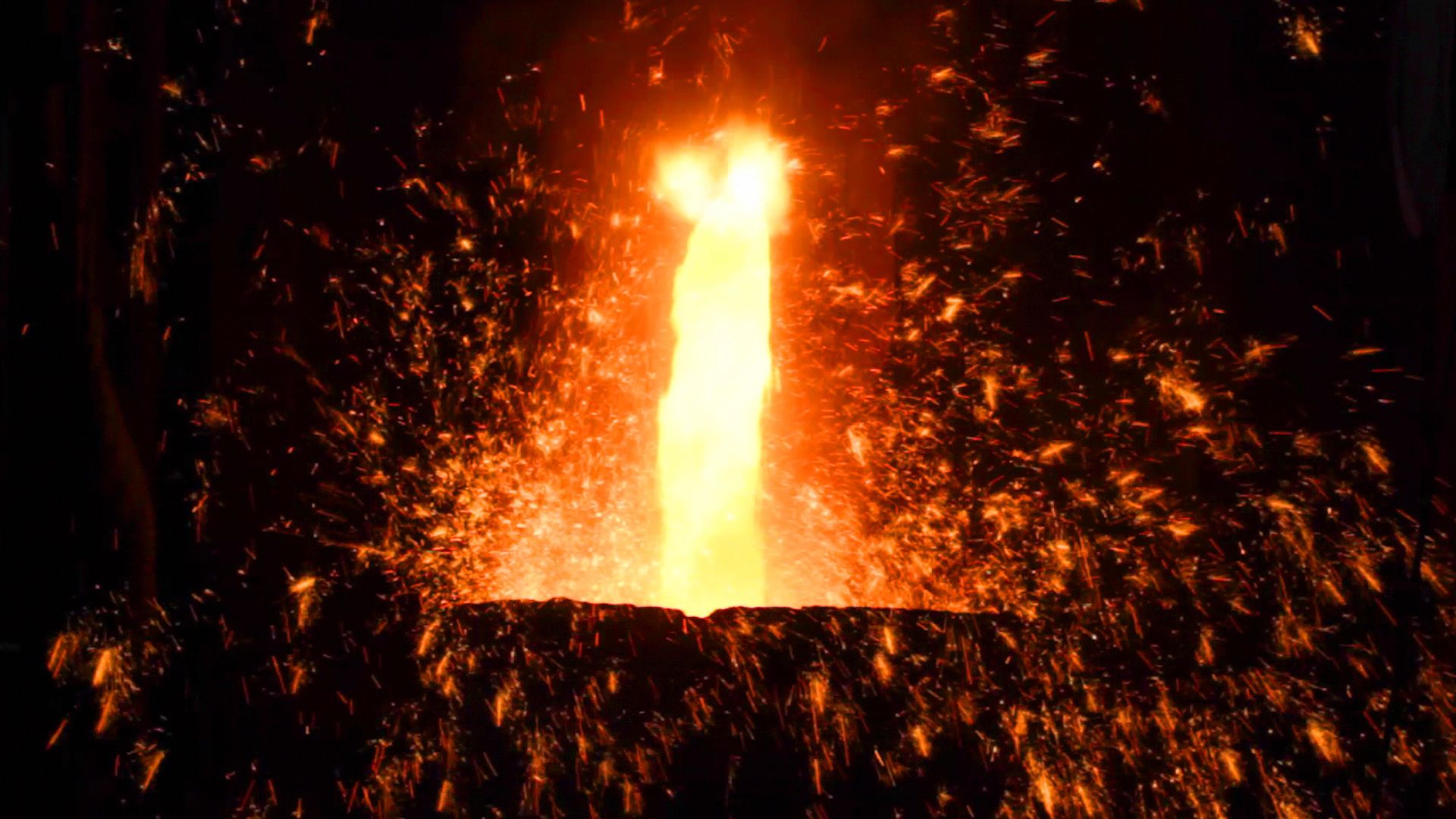
A blast furnace produces molten pig iron through a continuous, vertical process that relies on the chemical reduction of iron ore.1
The Process
The furnace is charged at the top with alternating layers of iron-bearing materials (such as ore pellets and sinter), coke, and a fluxing agent like limestone. As this "burden" descends through the vertical shaft (the stack), it is preheated by rising hot gases.12
Near the bottom of the furnace, preheated air—often enriched with oxygen—is blown in through nozzles called tuyeres. This air reacts vigorously with the coke, generating intense heat (approximately 1,650 °C) and producing carbon monoxide.12
Chemical Reduction
The carbon monoxide rises through the stack, reacting with iron oxides in the ore to strip away oxygen, leaving behind metallic iron. At the higher temperatures found in the intermediate zone known as the bosh, the ore softens and melts. Droplets of molten iron and slag trickle down through the coke to collect in the hearth at the bottom. The molten iron is then periodically drawn off through a taphole.3412