
How is electric power transmitted over long distances with less energy loss?
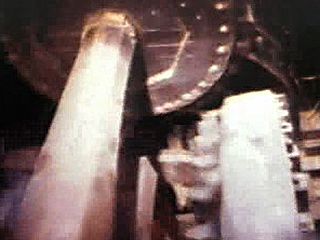
The ingenuity people used in harnessing waterpower can be seen in this medieval-style mill. The waterwheel is turned by a stream and is connected to a shaft that leads into the building. At the other end of the shaft is a gear. The connection of a series of gears translates the power from the stream to a shaft that drives a millstone, which grinds flour from grain.
(30 sec; 1.84MB)
To transmit electric power over long distances efficiently, power systems utilize high-voltage transmission to minimize energy loss caused by the resistance of the lines.21
The physics of this process is defined by the relationship between power, current, and voltage. While the total power transmitted is the product of current and voltage, the power lost as heat due to line resistance is proportional to the square of the current. Therefore, by using transformers to "step up" the voltage to very high levels, the corresponding current is reduced, which significantly decreases energy loss during transmission.123
Historically, early direct current (DC) systems struggled with long-distance transmission because they could not easily change voltages, forcing them to operate at low voltages and high currents, which resulted in substantial energy loss. The adoption of alternating current (AC) systems allowed for the practical use of transformers to adjust voltages efficiently, enabling the widespread distribution of electric power seen today. At the receiving end, substations use step-down transformers to reduce the voltage to safe, usable levels for consumers.21