
Britannica
Sources used in this answer
How is a gyrocompass different from a magnetic compass?
Created from Britannica articles
using AI.
AI can make mistakes, so verify using Britannica articles.
gyrocompass
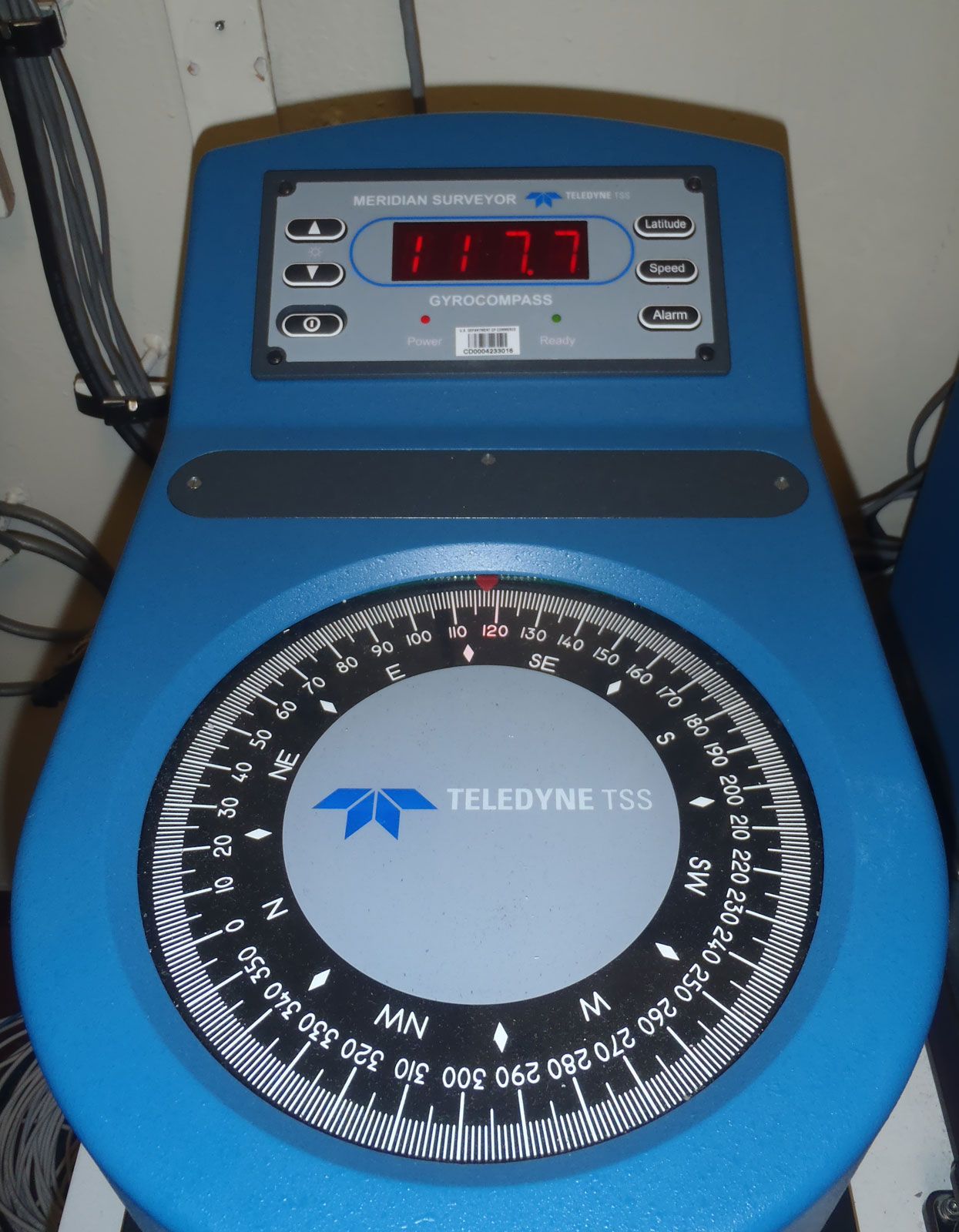
The gyrocompass aboard the National Oceanic and Atmospheric Administration's (NOAA) ship Rainier. Gyrocompasses are navigational instruments that use a continuously driven gyroscope to accurately seek the direction of true (geographic) north.
A gyrocompass and a magnetic compass differ primarily in their operating principles and their susceptibility to external interference.
- Operating Principle: A magnetic compass relies on the Earth's magnetic field, aligning a magnetized needle with magnetic north. In contrast, a gyrocompass uses a continuously driven gyroscope that seeks true (geographic) north by utilizing the Earth's rotation and the force of gravity.1234
- Interference: Magnetic compasses are subject to variation (or declination) and deviation, which is the deflection caused by local magnetic influences like steel structures or ore deposits. Because it is nonmagnetic, a gyrocompass is immune to these magnetic interferences.312
- Application: While magnetic compasses are used across various vehicles, including aircraft, the gyrocompass is a primary navigational device for ships and submarines. Notably, a gyrocompass is generally unsuitable for aircraft because high speeds can disrupt its north-seeking properties.31