
How does viscous fluid help damp the motion of a gyrocompass?
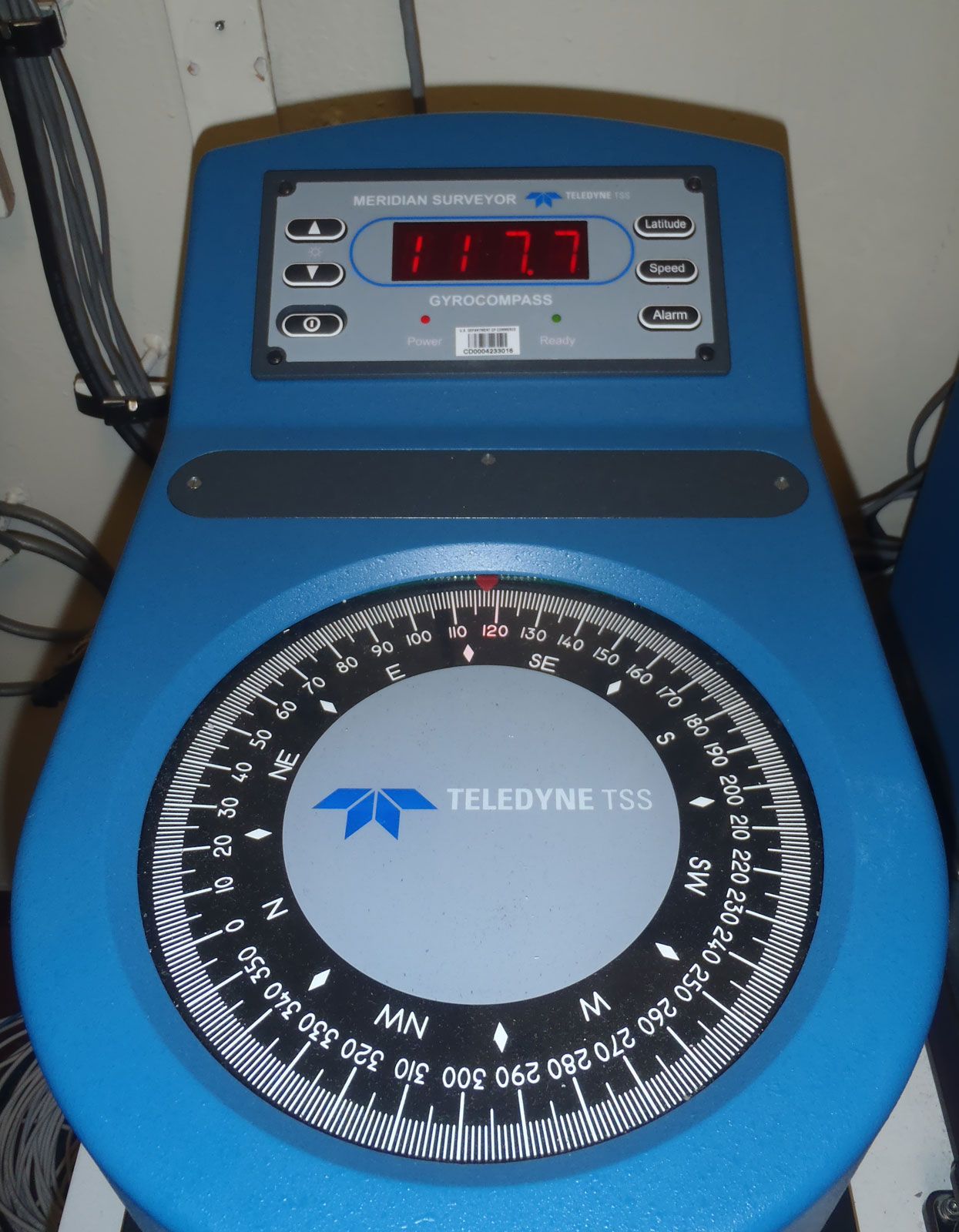
In a gyrocompass, viscous fluid is used to damp the instrument's oscillations, allowing it to settle on the meridian rather than continuously passing through it. This damping method, developed by Max Schuler, relies on the restricted flow of a viscous fluid that responds to the tilt of the gyroscopic element.1
As the gyroscopic element tilts, the fluid flows through a constriction. The combination of the fluid's viscosity and the direction of its flow creates an antipendulous torque applied in the proper phase to oppose the motion of the body. This horizontal torque is directed to precess the gyroscope toward the meridian at all times—pointing west when the spin axis is east of the meridian and east when it is west of the meridian. By withdrawing energy from the system, which is then absorbed as viscous friction, the fluid changes the gyrocompass's motion from an undamped elliptical path to a spiraling-in motion that settles on true north.1