
Britannica
Sources used in this answer
How does virtual reality create the feeling of being inside a simulated environment?
Created from Britannica articles
using AI.
AI can make mistakes, so verify using Britannica articles.
virtual reality
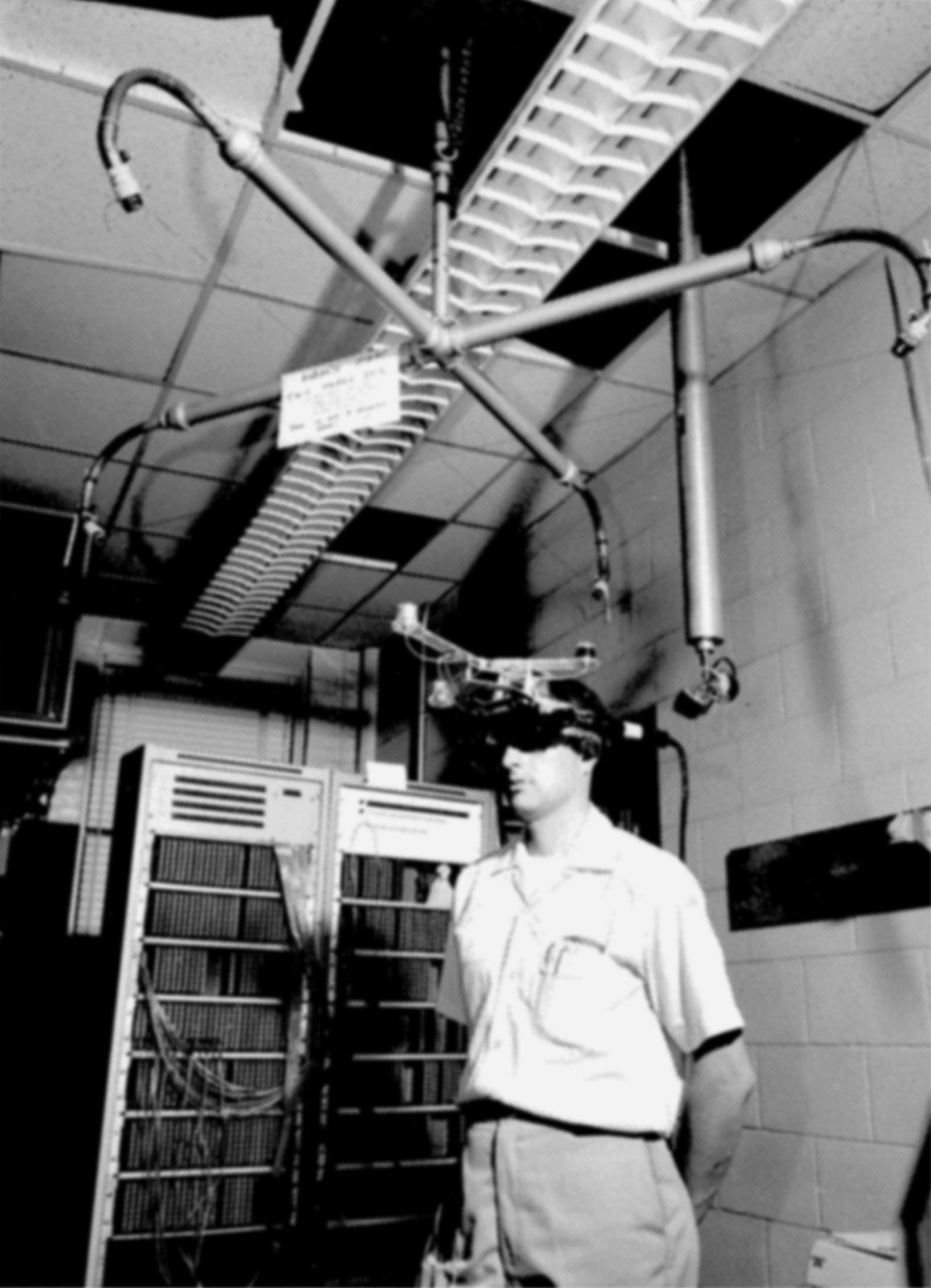
Early head-mounted display device developed by Ivan Sutherland at Harvard University, c. 1967.
Virtual reality (VR) creates the feeling of being inside a simulated environment—a phenomenon known as telepresence—by using computer modeling and simulation to immerse the user in an artificial three-dimensional sensory space.1
This illusion is primarily achieved through the following mechanisms:
- Visual Immersion: Users typically wear a head-mounted display (HMD) featuring stereoscopic screens. These devices isolate the user visually, providing a 3-D graphical output that mimics depth perception.12
- Real-Time Interaction: Motion sensors track the user’s movements, such as head turns or steps, and adjust the displayed images in real time. This ensures that the visual perspective remains convincingly synchronized with the user's physical actions.12
- Multisensory Feedback: Beyond visuals, VR systems can incorporate interactive devices like data gloves equipped with force-feedback technology. These allow users to touch, pick up, and manipulate objects within the virtual environment, further grounding the experience in a simulated reality.1
By combining these technologies, VR bridges the gap between digital data and human perception, enabling a user to navigate and interact with a computer-generated world as if they were physically present.12