
Britannica
Sources used in this answer
How does the free surface effect make a damaged ship’s heel worse?
Created from Britannica articles
using AI.
AI can make mistakes, so verify using Britannica articles.
naval architecture
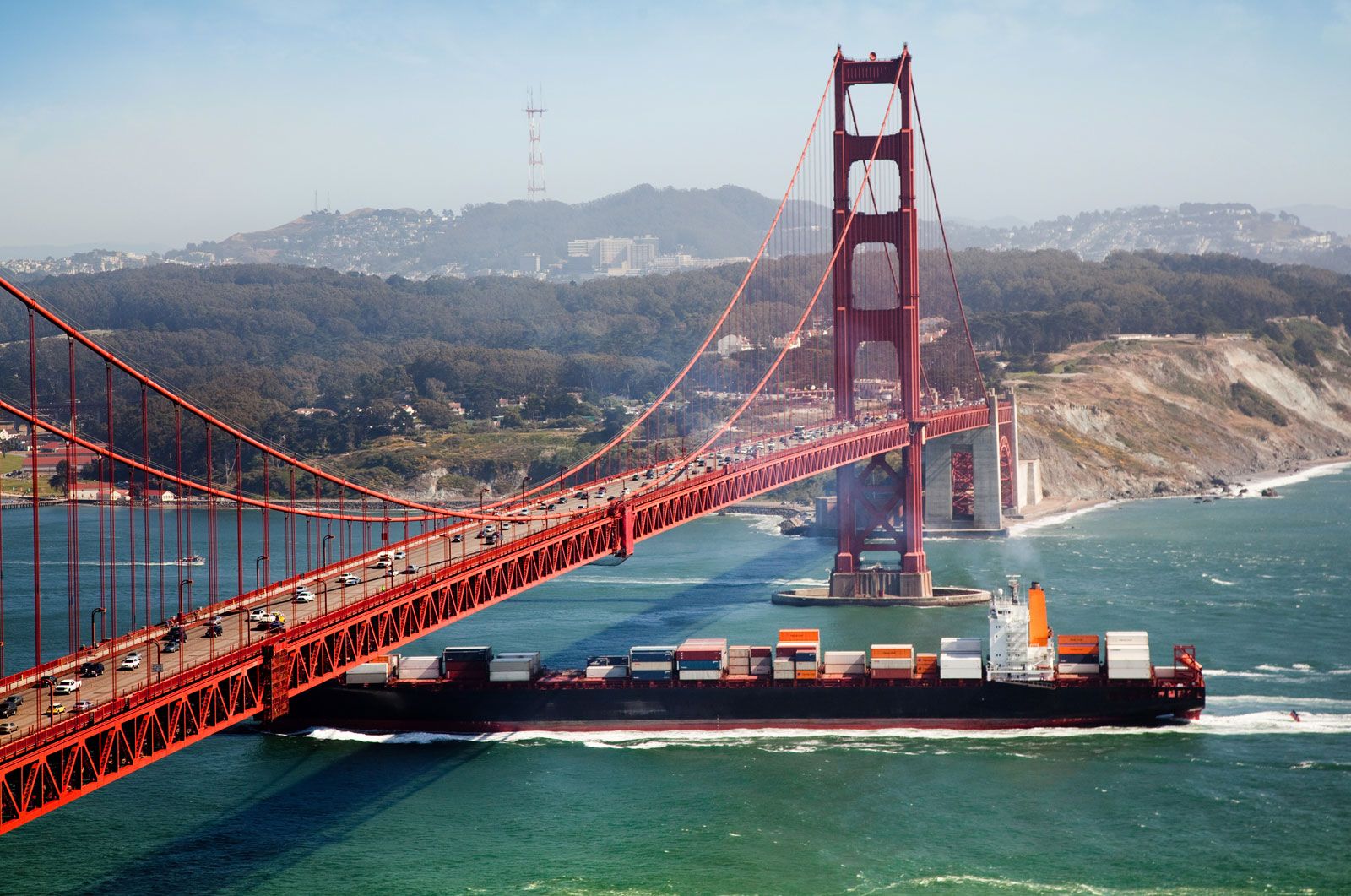
A cargo ship passing the Golden Gate Bridge, near San Francisco.
In naval architecture, the free surface effect is a critical hazard that compromises a vessel's stability following damage. When a ship’s hull is breached, the resulting floodwater is often unconfined, creating a "free surface" within the flooded compartments.1
This effect exacerbates a ship's heel through the following mechanism:
- Fluid Movement: Because the water is unconfined, it naturally flows to the lowest reachable point within the ship as it inclines.1
- Weight Shift: As the ship heels, the mass of the flooding water shifts toward the side of the inclination. This movement of weight creates an upsetting moment that further increases the angle of heel.1
- Loss of Stability: The presence of this shifting liquid effectively reduces the vessel's transverse metacentric stability, making it increasingly difficult for the ship to return to an upright position.2
This phenomenon is particularly dangerous in vessels with large, open interior spaces—such as ferries with vehicle decks—where bulkheads do not exist to restrict the movement of water across the hull.1