
Britannica
Sources used in this answer
How does the area under a statical stability curve relate to capsizing energy?
Created from Britannica articles
using AI.
AI can make mistakes, so verify using Britannica articles.
naval architecture
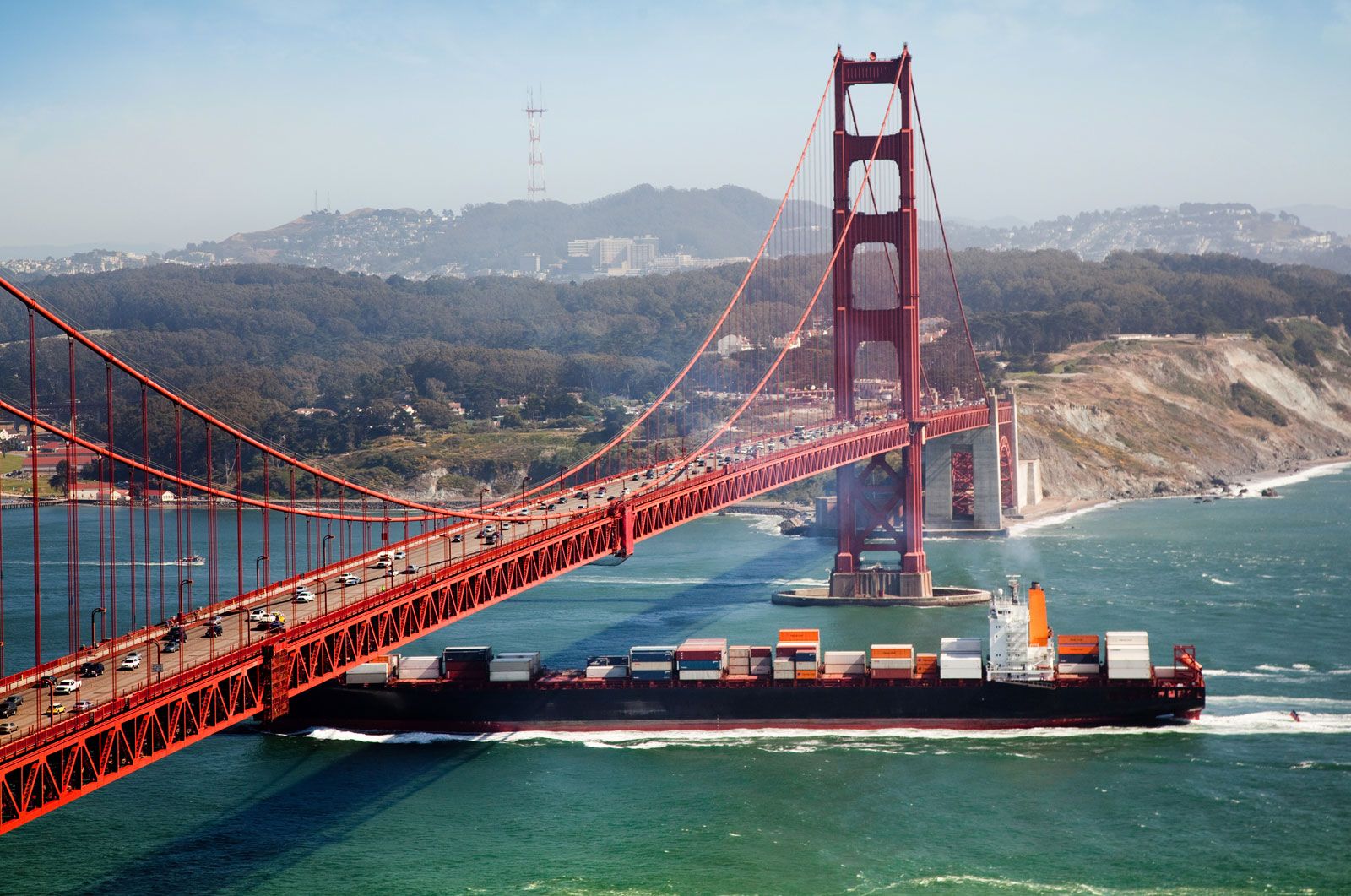
A cargo ship passing the Golden Gate Bridge, near San Francisco.
In naval architecture, the area under a statical stability curve—which plots the righting arm () against the angle of heel—is directly proportional to the energy required to heel a vessel to a specific angle.1
This relationship is fundamental to understanding dynamic stability. Because capsizing is often a dynamic event caused by external forces like wind gusts or heavy seas, a vessel's ability to resist capsizing is measured by the total energy required to rotate it to the point of vanishing stability. Consequently, the area enclosed by the statical stability curve serves as a critical metric for assessing a ship's safety, and international stability standards are typically based on this calculated energy capacity.2