
How does pendulosity give a gyrocompass its north-seeking property?
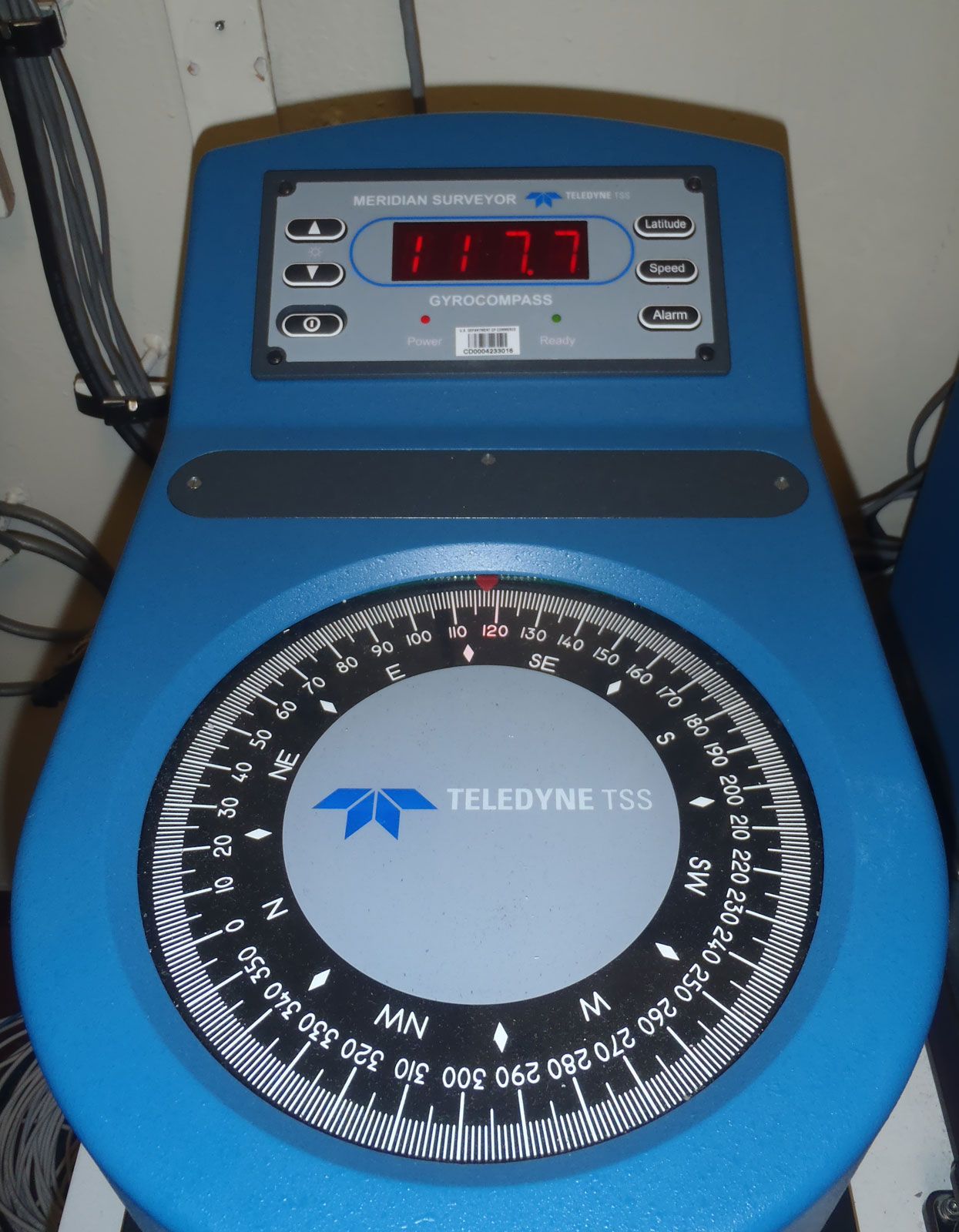
A gyrocompass achieves its north-seeking property by utilizing a gyroscope frame with a mass unbalance, known as pendulosity, positioned at right angles to the spin axis.1
When the spin axis is not aligned with the meridian, the rotation of the Earth causes the axis to tilt relative to the horizon. This tilt allows gravity to act upon the pendulosity, creating a horizontal torque. According to the basic law of gyroscopics, the instrument precesses in response to this torque, causing the spin axis to move toward the meridian.1
Without damping, the spin axis would continuously oscillate around the meridian in an elliptical path. To function as a reliable navigational instrument, the system must incorporate damping mechanisms—such as restricted viscous fluid flow or specialized motor-driven systems—to absorb energy and force the axis to settle precisely on true north.12