
How does pearlite form in steel?
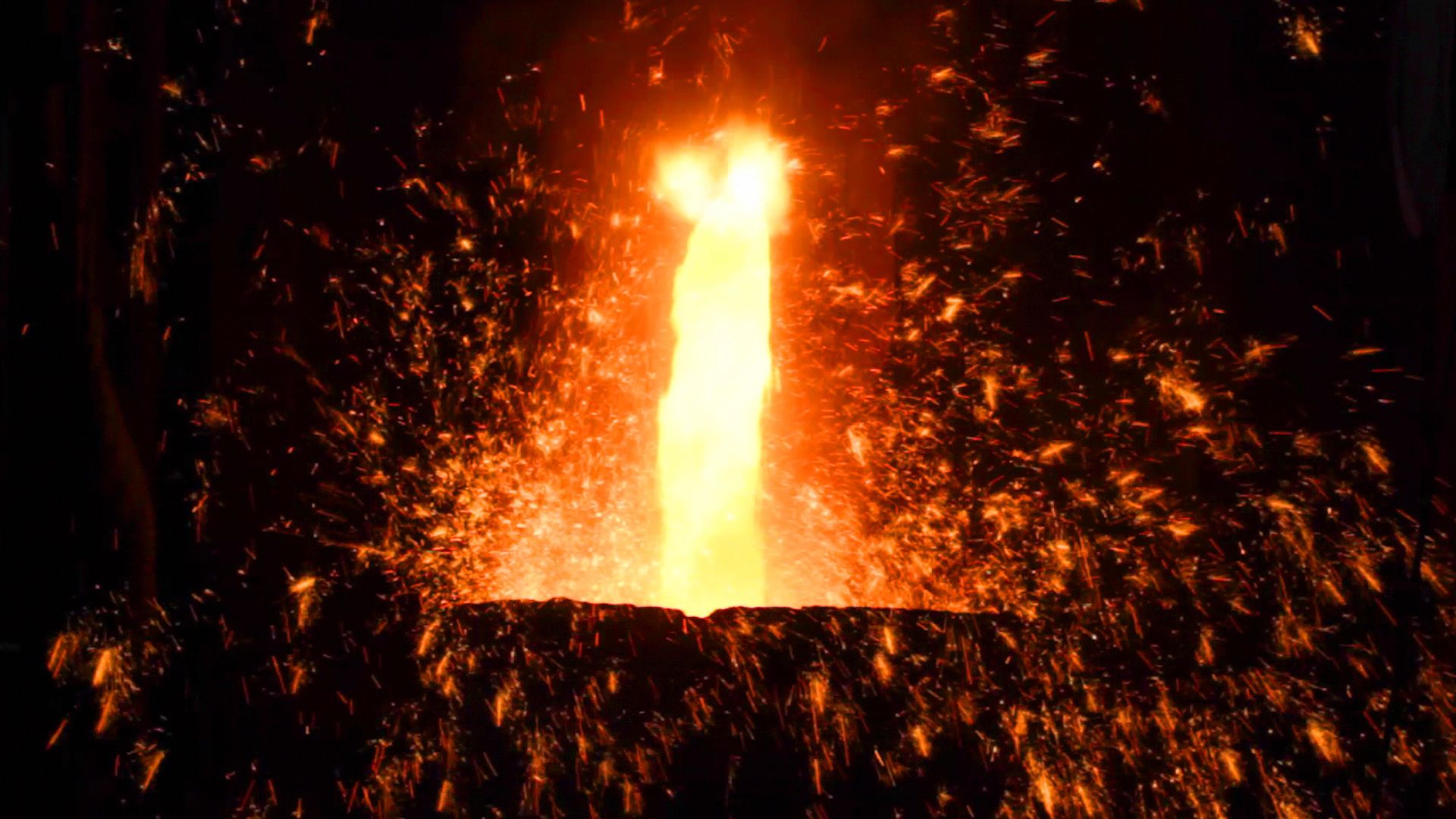
Pearlite forms in steel through a process known as the eutectoidic transformation. As steel cools, it reaches a critical temperature—approximately 727°C (1,341°F)—at which the austenite crystals undergo a structural change.1
During this transformation, the austenite decomposes into a fine, lamellar microstructure consisting of alternating platelets of ferrite and cementite (iron carbide). This resulting structure is called pearlite.1
The final microstructure of the steel depends on its carbon content and cooling rate:
* Carbon Content: Steel with 0.77 percent carbon transforms entirely into pearlite. Steel with lower carbon content results in a mixture of pearlite and ferrite, while steel with higher carbon content contains pearlite and excess cementite.1
* Cooling Rate: The rate of cooling influences the fineness of the pearlite structure. Faster cooling rates provide less time for carbon atoms to diffuse through the crystal lattices, resulting in a finer microstructure and increased hardness. If the steel is cooled rapidly enough, such as through quenching, the formation of pearlite is suppressed entirely, leading to the creation of martensite instead.2