
Britannica
Sources used in this answer
How does iron ore sintering turn fine particles into larger pieces?
Created from Britannica articles
using AI.
AI can make mistakes, so verify using Britannica articles.
iron processing
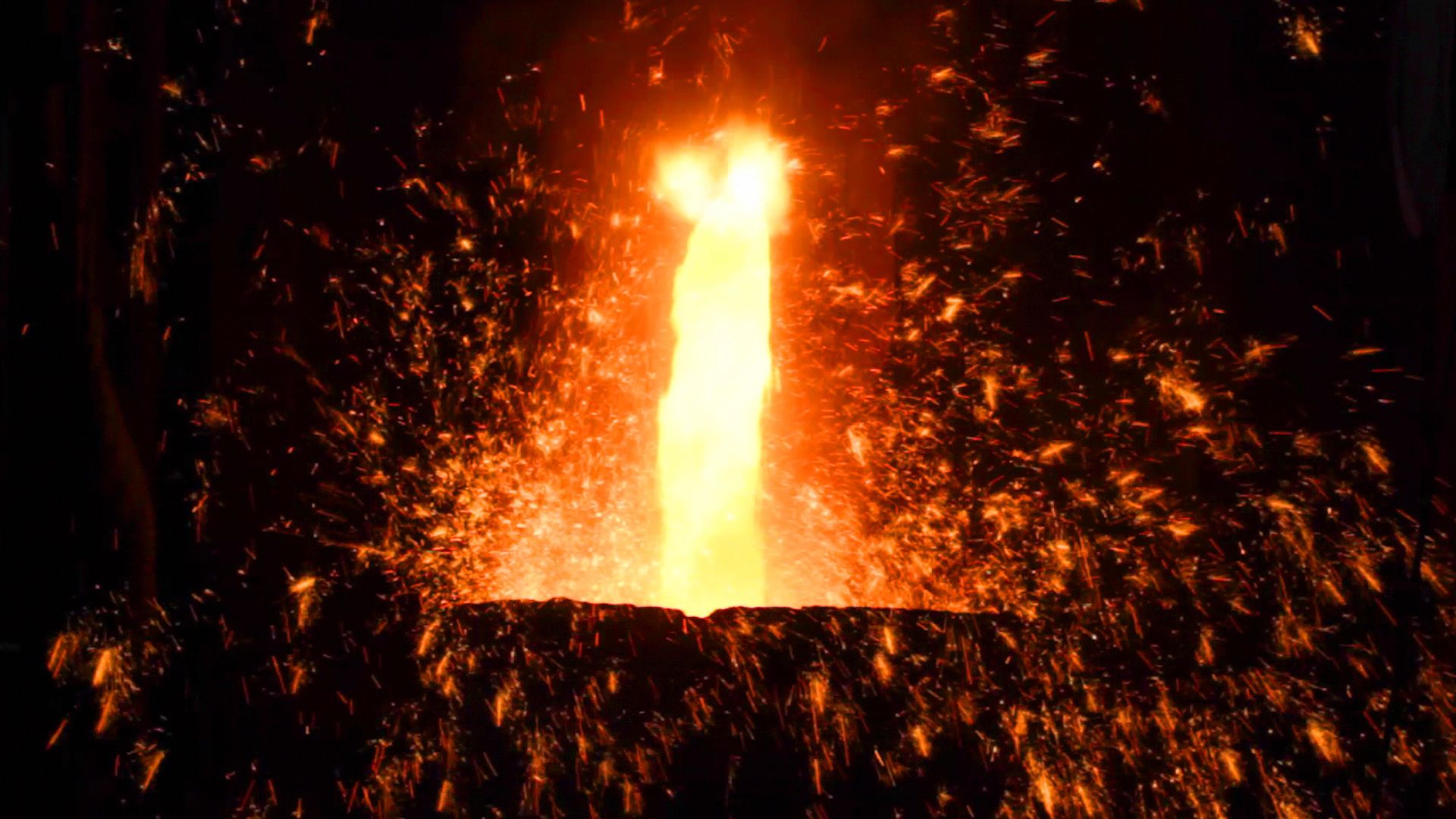
Iron ore is one of the most abundant elements on Earth, and one of its primary uses is in the production of steel. When combined with carbon, iron changes character completely and becomes the alloy steel.
In iron processing, sintering transforms fine iron ore particles into larger, usable lumps through a process of partial fusion.12
The procedure involves several key steps:
- Preparation: The ore fines are moistened to encourage the particles to adhere to one another, and coke breeze is added to the mixture to serve as fuel.2
- Ignition: This mixture is placed on a traveling-grate machine. As it passes under an ignition hood, a gas burner ignites the coke on the surface of the bed.12
- Combustion and Fusion: Air is drawn downward through the bed by a suction fan, maintaining combustion throughout the layer. This generates intense heat—ranging from 1,325° to 1,500° C—which causes the particles to partially melt and fuse together.12
- Result: By the time the material reaches the end of the grate, it has formed solid lumps approximately 2.5 cm in diameter, which are then cooled, broken, and screened for use in a blast furnace.12
This process reduces the total surface area of the particles, improving the material's physical properties for further steel manufacturing.1