
How does energy remain conserved when a moving object stops because of friction?
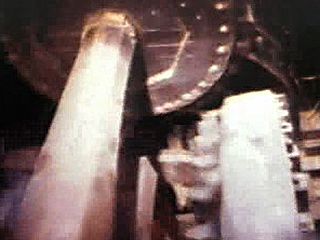
The ingenuity people used in harnessing waterpower can be seen in this medieval-style mill. The waterwheel is turned by a stream and is connected to a shaft that leads into the building. At the other end of the shaft is a gear. The connection of a series of gears translates the power from the stream to a shaft that drives a millstone, which grinds flour from grain.
(30 sec; 1.84MB)
When a moving object stops due to friction, energy is not lost or destroyed; rather, it is converted into a different form. According to the first law of thermodynamics, the total energy within a closed system remains constant.12
As an object moves, it possesses kinetic energy—the energy of motion. When friction acts upon the object to slow it down, that kinetic energy is transformed into thermal energy. This process represents a change in the form of energy rather than its disappearance.132
While this energy is conserved, it is important to note that the conversion of mechanical energy into heat is not completely reversible. This fundamental limitation, where energy is degraded into a less useful form, is described by the second law of thermodynamics. Ultimately, the total energy of the system remains the sum of its kinetic, potential, and thermal components.341