
How does damping change the gyrocompass motion from an ellipse into a spiral?
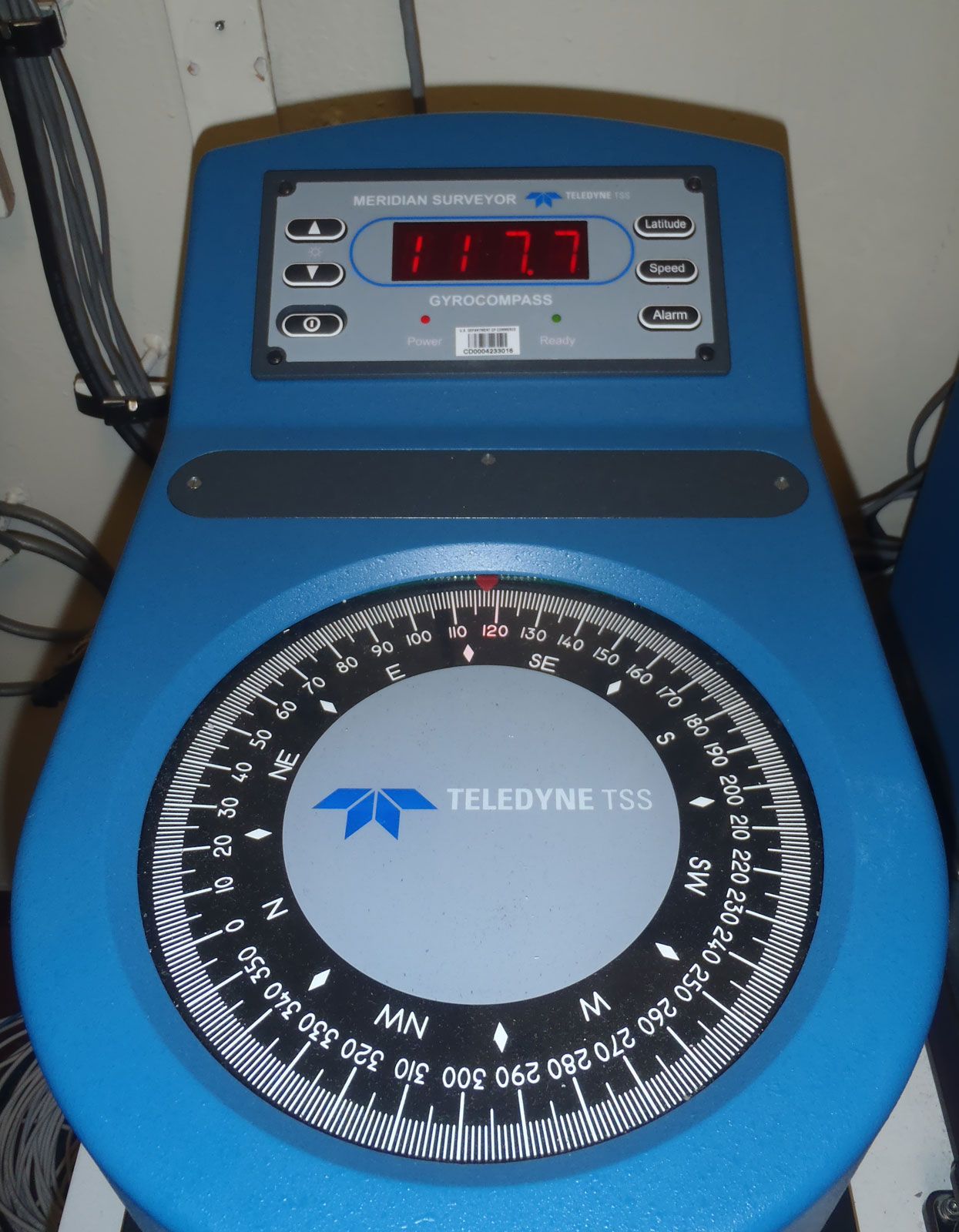
In an undamped gyrocompass, the interaction between the Earth's rotation and the instrument's pendulosity causes the spin axis to trace an ellipse about the meridian and the horizontal. Because the system would otherwise oscillate indefinitely, damping is required to allow the unit to settle on the meridian.1
Damping changes this elliptical motion into a spiral by introducing a control factor that opposes the velocity of the gyroscopic element. This is typically achieved by applying an antipendulous torque—often through the restricted flow of a viscous fluid or a servomechanism—that is phased to precess the gyro toward the meridian at all times.12
By delaying the flow of the fluid or offsetting the point of action of the control, the system effectively withdraws energy from the oscillation. This combined action of the pendulous and damping torques forces the spin axis to trace a path that spirals inward, eventually causing the gyrocompass to settle at true north.12