
Britannica
Sources used in this answer
How does cargo density affect the size and internal layout of a ship?
Created from Britannica articles
using AI.
AI can make mistakes, so verify using Britannica articles.
naval architecture
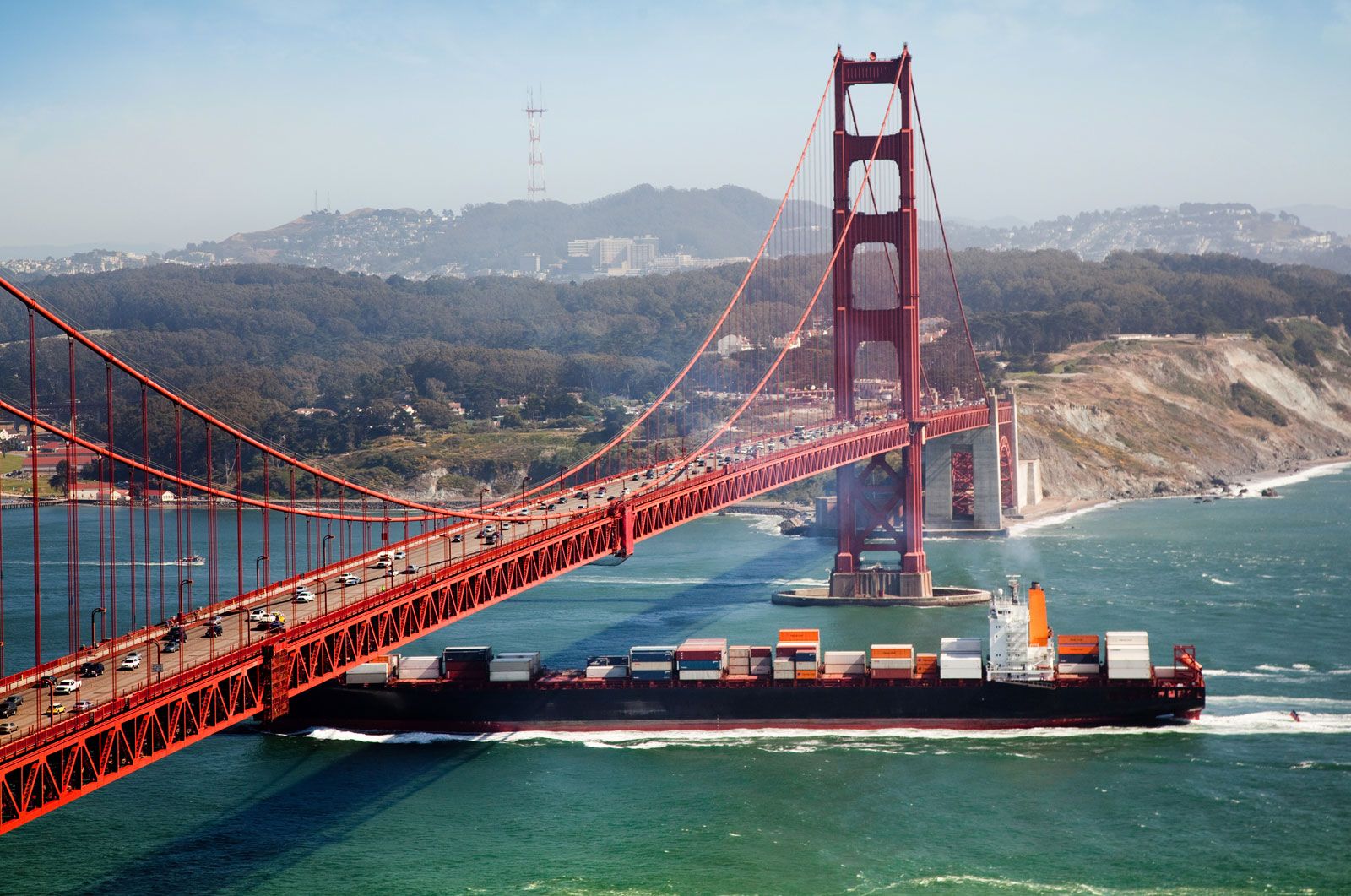
A cargo ship passing the Golden Gate Bridge, near San Francisco.
In naval architecture, cargo density is a primary factor in determining a vessel's required internal volume and overall dimensions. The relationship between a cargo's weight and the space it occupies is known as the stowage factor.12
Impact on Size and Layout
- High-Density Cargoes: Materials such as machinery require relatively little hold capacity. For these vessels, the naval architect focuses on achieving the necessary deadweight capacity while ensuring the hull dimensions and displacement are sufficient to support the weight.32
- Low-Density Cargoes: Cargoes like grain or wheeled vehicles (which require significant clearance) have a high stowage factor, meaning they demand large hull volumes. To accommodate this, ships are often designed with a "boxy" outline, high freeboard, and extensive superstructure to maximize internal space.13
Engineering Considerations
When designing for low-density cargo, architects must balance volume requirements with stability. Because these ships often have high centers of gravity, they may incorporate fixed or water ballast to maintain safety. Furthermore, internal layouts are optimized to facilitate cargo handling; for example, roll-on/roll-off ships arrange machinery at the sides of the vessel to preserve clear, unobstructed space for vehicle movement.14