
How does an applied electric field change the sizes of ferroelectric domains?
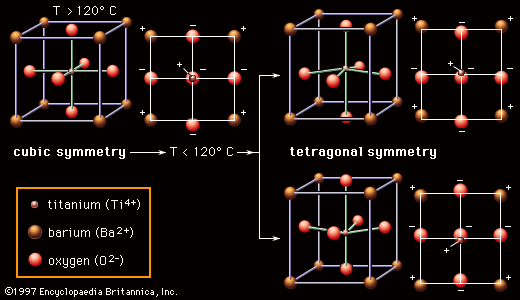
When an external electric field is applied to a ferroelectric material, the boundaries between adjacent domains shift. This movement allows domains that are already aligned with the direction of the applied field to grow in size at the expense of those that are out of alignment.1
This process results in a large net polarization within the material. While a material may initially consist of a multitude of randomly oriented domains—leading to an overall cancellation of polarization—the application of a strong electric field forces these domains to orient predominantly in one direction. This mechanism is fundamental to the material's high susceptibility to electric polarization, which directly influences its dielectric constant and capacity to store electric charge.12