
How does a pendulous gyroscope turn toward the meridian?
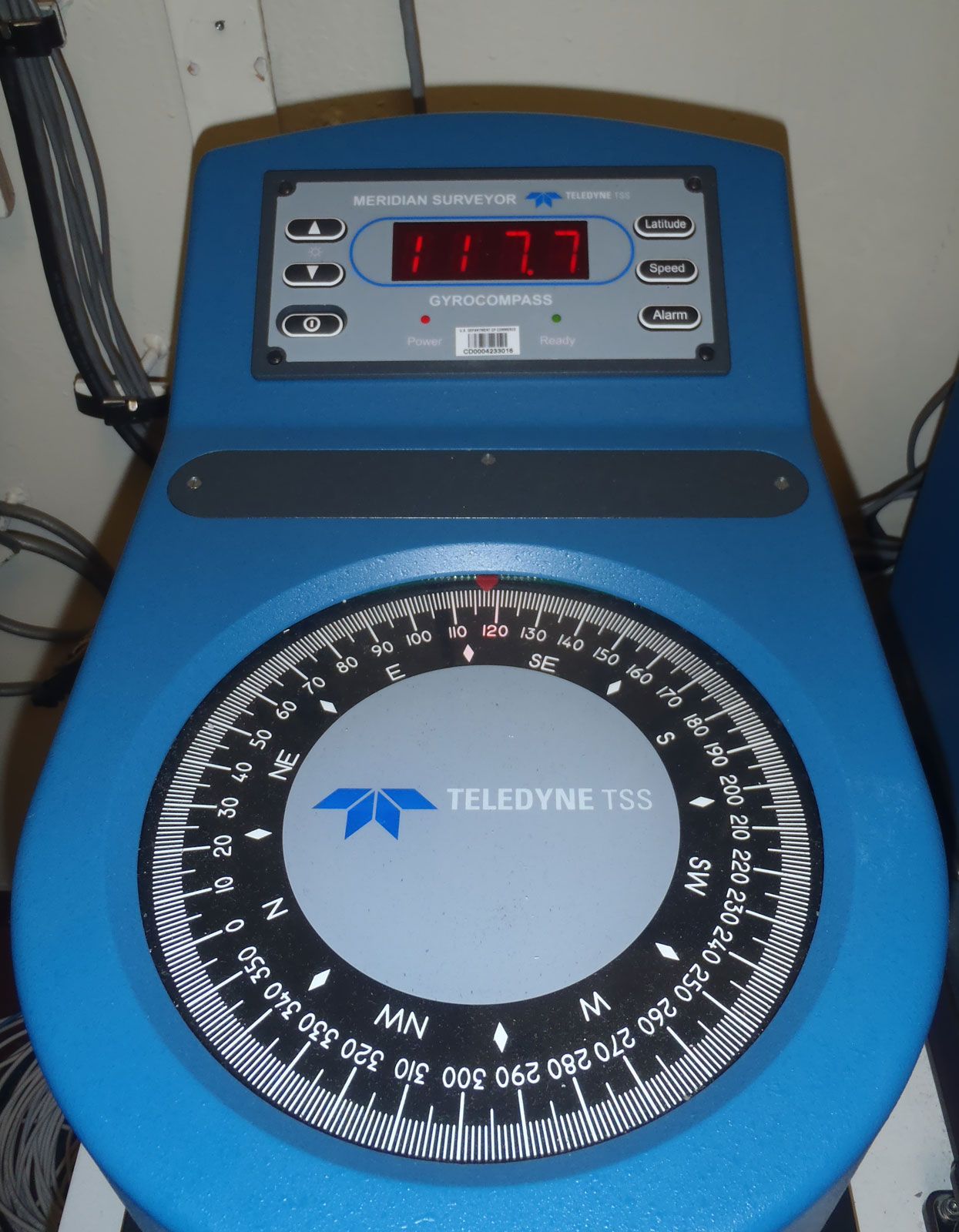
A pendulous gyrocompass turns toward the meridian by utilizing the interaction between Earth’s rotation and the torque generated by its pendulosity.12
When the spin axis is pointed slightly east of north, Earth’s rotation causes the horizon to dip relative to the gyroscope, which remains fixed in inertial space. This apparent rise of the spin axis creates a horizontal torque due to the effect of gravity on the device's pendulous mass. According to the basic law of gyroscopics, the gyroscope precesses about the vertical axis in response to this torque, moving the spin axis toward the meridian.1
As the axis continues to rise and pass through the meridian, the pendulous torque changes based on the axis's position relative to the horizon. This process causes the spin axis to trace an elliptical path around the meridian. To function as a reliable navigational instrument, the system must be damped—typically through viscous fluid flow or servomechanisms—to suppress these oscillations and allow the instrument to settle precisely on true north.12