
How does a gyrocompass move in an ellipse before damping is applied?
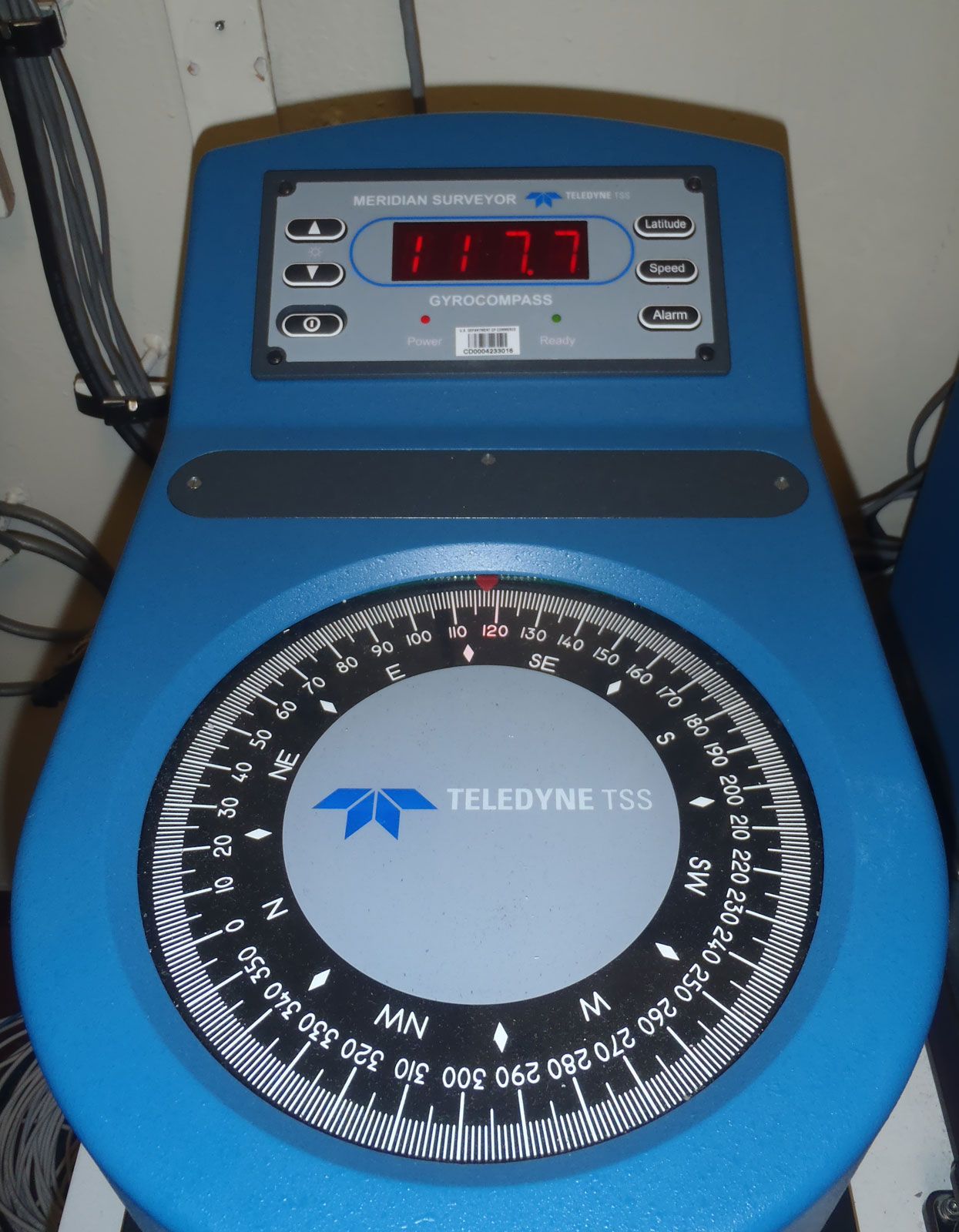
Before damping is applied, a gyrocompass does not settle on the meridian but instead traces an ellipse about the meridian and the horizontal.1
This motion occurs because the Earth's rotation causes the spin axis to rise or dip relative to the horizon, which generates pendulous torques due to gravity. When the spin axis is east of the meridian, Earth's rotation causes it to rise, creating a westward torque that makes the axis precess toward the meridian. As it passes the meridian and moves west, the spin axis begins to set, reducing the torque and eventually causing it to dip below the horizon. This dip creates an eastward torque, causing the axis to precess back toward the meridian and repeat the cycle. Without damping, the unit would continue to pass through the meridian indefinitely in this elliptical pattern.1