
How does a gyrocompass find true north?
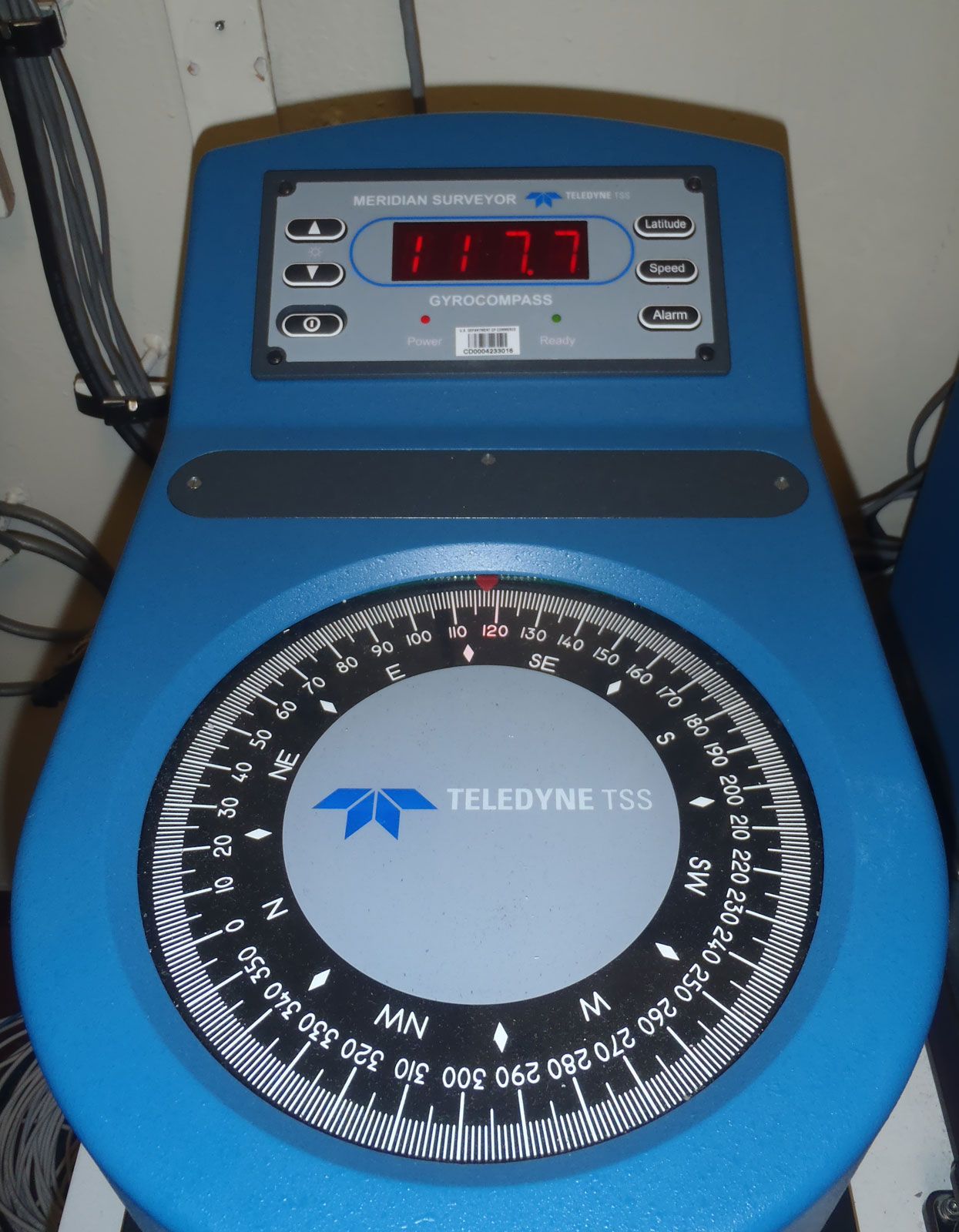
A gyrocompass finds true north by seeking an equilibrium direction under the combined influence of Earth’s daily rotation and the force of gravity.1
Unlike a magnetic compass, which aligns with the Earth's magnetic field, a gyrocompass utilizes a continuously driven gyroscope. The instrument incorporates pendulosity—a weight or similar mechanism—that applies torque to the gyroscope. When the gyroscope’s axis of spin begins to deviate or wobble (precess) due to the Earth's rotation, this pendulous weight exerts a force that pulls the axis back into alignment with the meridian.123
To ensure the device remains accurate on a moving vessel, it is designed to damp out oscillations, allowing it to settle steadily on true north. Because it relies on physical forces rather than magnetism, it is immune to interference from steel structures or ore deposits, making it a reliable tool for ship navigation.1