
How does Earth’s rotation help a gyrocompass point north?
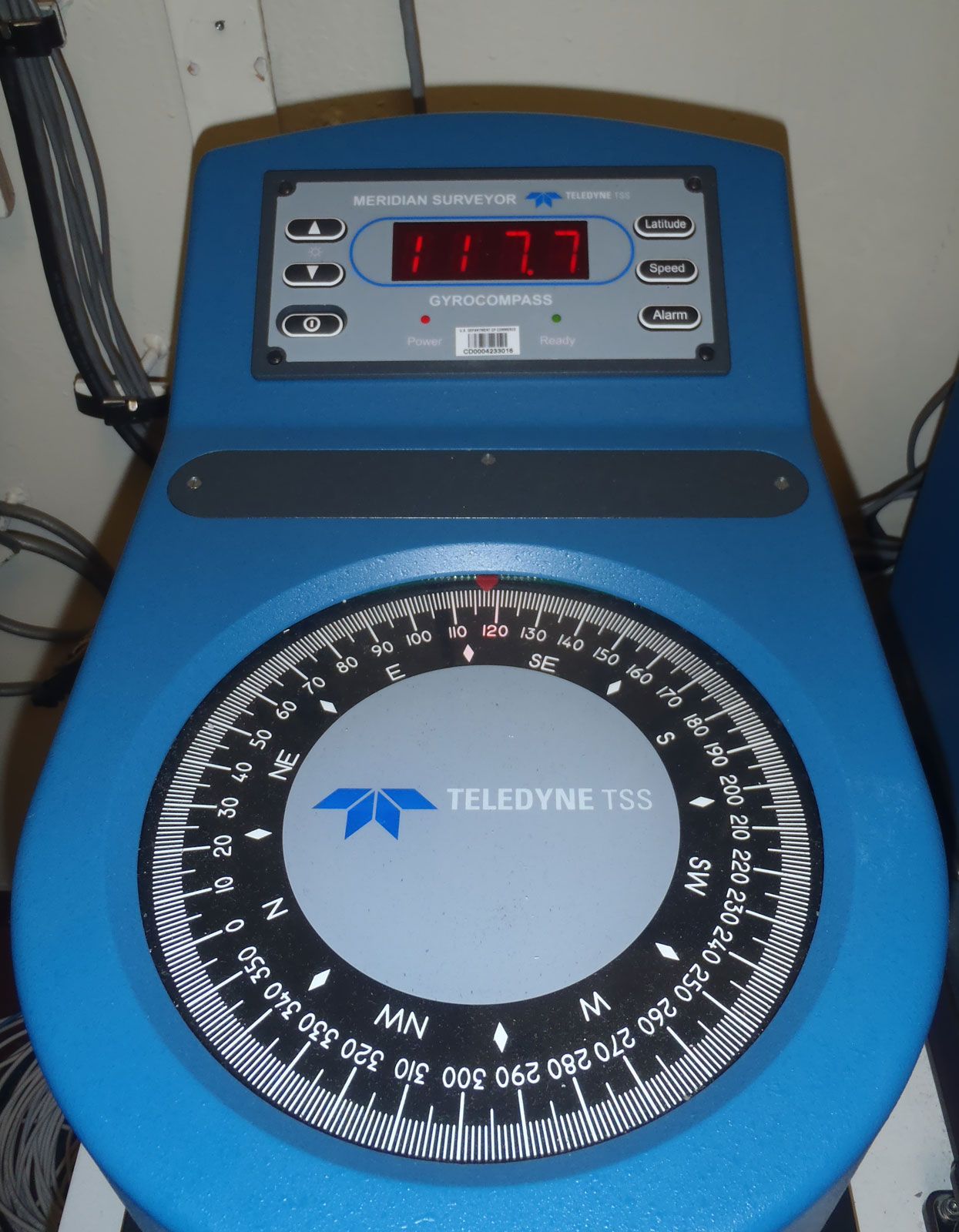
A gyrocompass functions by seeking an equilibrium direction through the combined interaction of gravity and the daily rotation of Earth.1
The instrument utilizes a continuously driven gyroscope that incorporates pendulosity—a deliberate imbalance that allows gravity to act upon the device. As Earth rotates, the gyroscope’s spin axis experiences a torque due to this pendulosity. This interaction causes the axis to precess, a movement that continues until the axis aligns itself with the meridian, pointing toward true geographic north.123
By damping out oscillations, the system settles into this north-seeking orientation. Because it relies on physical principles rather than magnetism, the gyrocompass remains immune to the interference that affects traditional magnetic compasses, making it a vital tool for maritime navigation.1