
Britannica
Sources used in this answer
How do watertight bulkheads limit flooding after a ship’s hull is damaged?
Created from Britannica articles
using AI.
AI can make mistakes, so verify using Britannica articles.
naval architecture
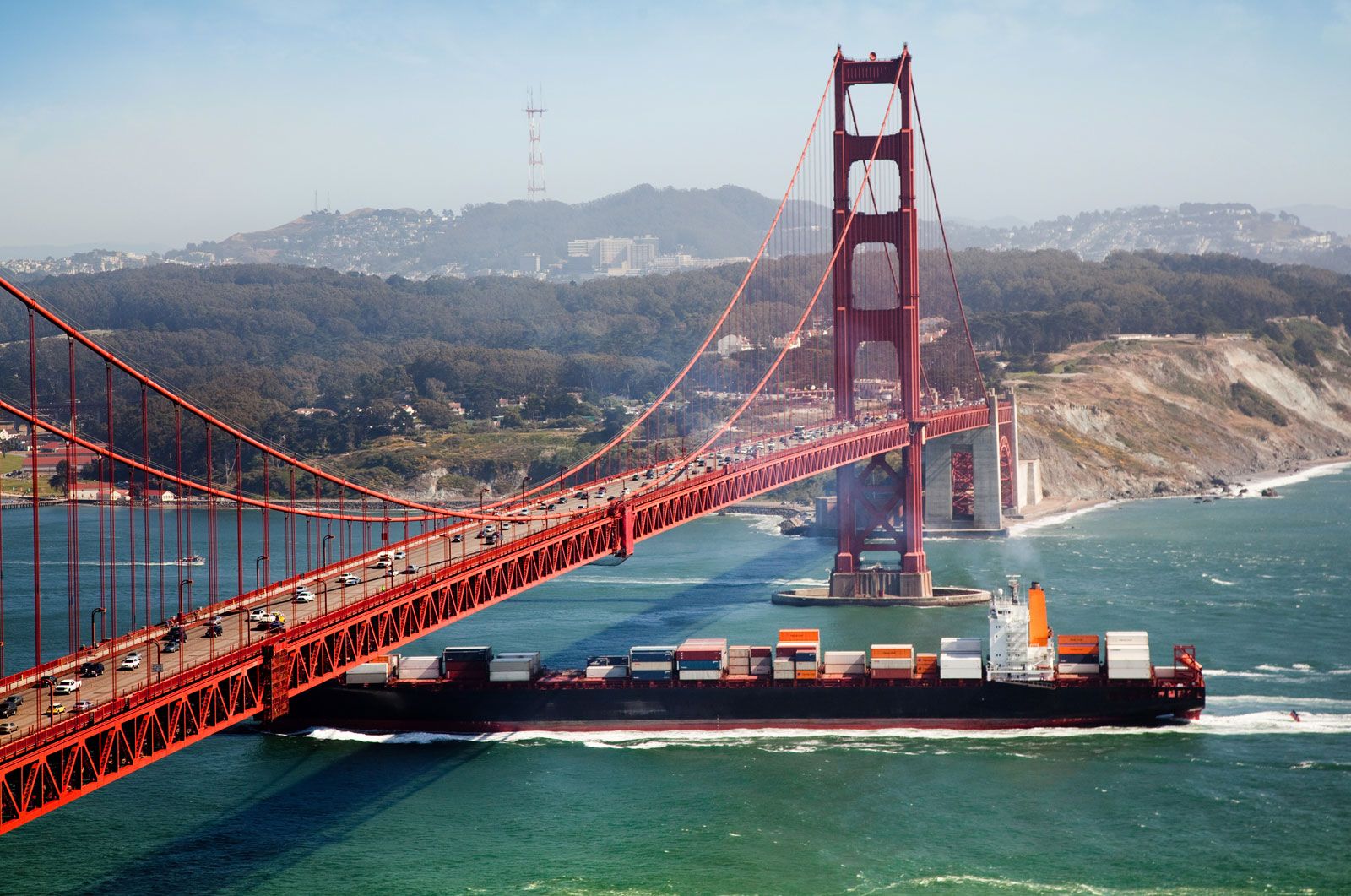
A cargo ship passing the Golden Gate Bridge, near San Francisco.
Watertight bulkheads are essential components in naval architecture designed to manage the consequences of hull damage. By subdividing the ship’s interior into distinct, sealed compartments, these structures prevent water from flooding the entire vessel after a breach.12
When a ship’s hull is damaged, the bulkheads restrict the ingress of water to the specific compartments directly affected by the breach. This containment is critical for two primary reasons:
- Buoyancy Maintenance: By limiting the volume of water that can enter the ship, bulkheads ensure that the vessel retains enough buoyancy to remain afloat. Naval architects use floodable-length curves to strategically place these transverse bulkheads, ensuring that even if specific sections are flooded, the ship does not sink below a designated margin line.12
- Retarding Sinking: Even if the damage is severe enough to eventually sink the ship, bulkheads significantly slow the rate of flooding. This delay provides vital time for emergency response and maximizes the survival chances of those on board.1
Modern standards, such as those established by the Safety of Life at Sea Convention, dictate the required level of subdivision based on the ship's type and size.12