
Britannica
Sources used in this answer
How do sails provide propulsion for a boat?
Created from Britannica articles
using AI.
AI can make mistakes, so verify using Britannica articles.
boat
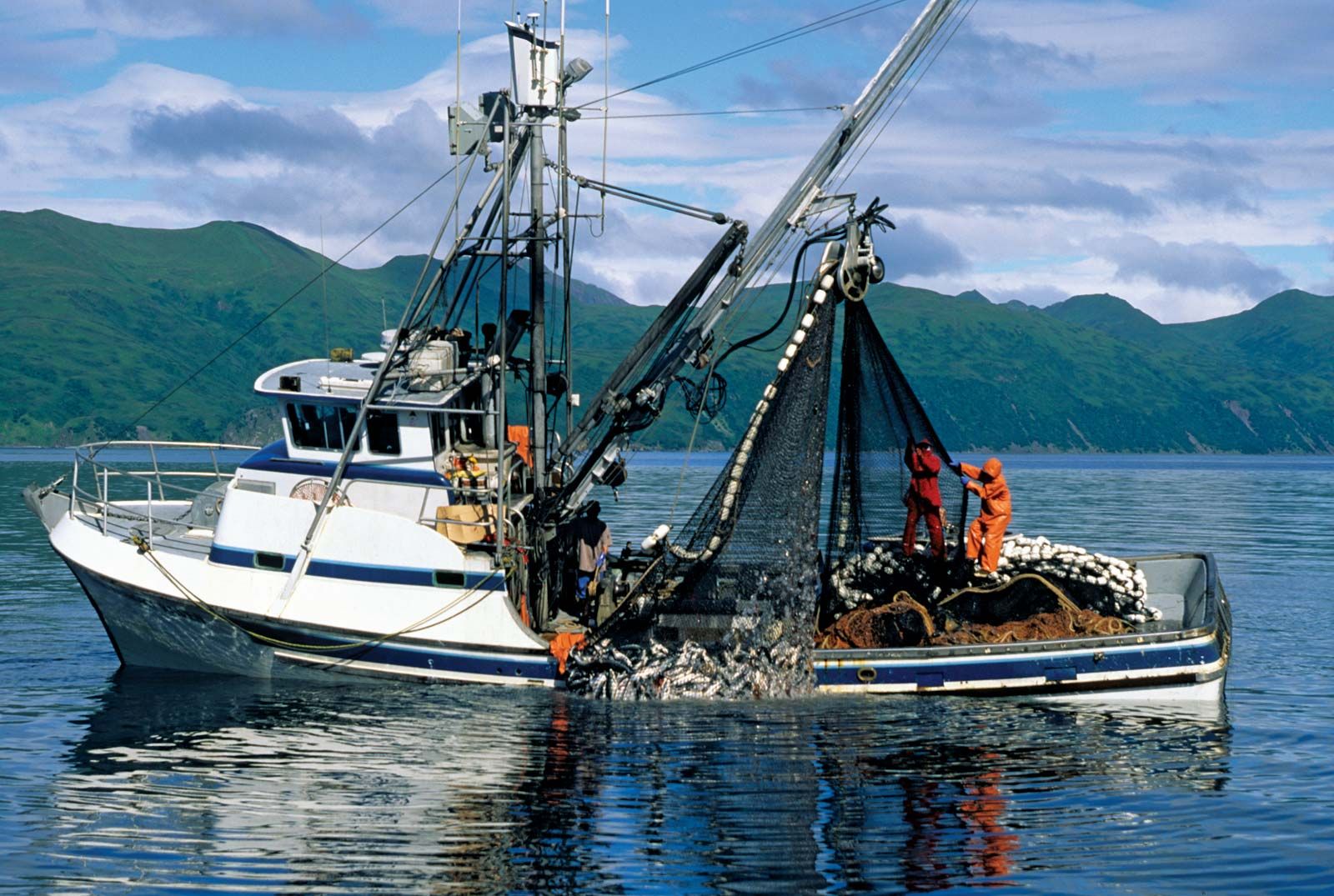
A commercial salmon-fishing boat in Alaska.
Sails provide propulsion for a boat by harnessing wind power through two primary mechanisms, depending on the sail type and the boat's direction relative to the wind.1
- Wind Pressure: Square sails function primarily by capturing the force of the wind directly against the afterside of the sail, pushing the craft forward.1
- Aerodynamic Lift: Fore-and-aft sails act as airfoils, similar to an aircraft wing. When a boat sails into the wind, the sail creates a pressure differential—with higher pressure on one side and lower pressure on the other—which generates a lift force that propels the vessel. In this configuration, the mast serves as the leading edge of the airfoil.2
To effectively utilize these forces, boats often rely on a keel or centreboard to provide lateral resistance, which prevents the boat from sliding sideways and helps convert the wind's energy into forward motion.3