
How do piezoelectric microphones convert sound vibrations into electrical signals?
Piezoelectric microphones convert sound vibrations into electrical signals by utilizing the direct piezoelectric effect.1
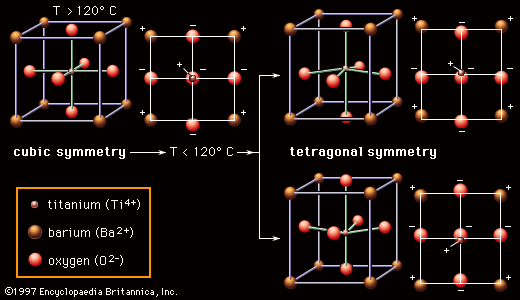
These microphones contain materials, such as specific piezoelectric ceramics or crystals, that lack a center of symmetry in their structure. When sound waves strike the microphone, they exert mechanical pressure—such as bending, twisting, or squeezing—on the material. This physical stress causes small displacements of ions within the crystal lattice, which separates the centers of positive and negative charge.21
As a result of this internal displacement, the material becomes electrically polarized, generating a voltage across its surface. This produced voltage is proportional to the applied stress, effectively transforming the mechanical energy of the sound vibrations into a corresponding electrical signal that can be captured and amplified.13