
How do piezoelectric materials help sonar generate sound?
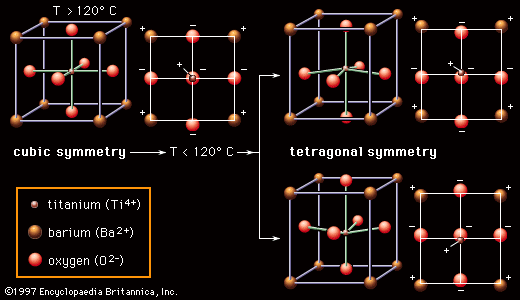
Piezoelectric materials, such as specific ceramics and crystals, are essential to sonar technology because they function as acoustic transducers that convert electrical energy into acoustic energy.1
This process relies on the converse piezoelectric effect. When these materials are subjected to an electromagnetic field, they undergo a physical change in dimension, effectively vibrating to produce mechanical motion. By applying an alternating electric field that matches the material's natural mechanical resonance frequency, these vibrations are significantly amplified.234
When these materials are suitably mounted—often in an oil-filled housing—these induced mechanical vibrations generate sound waves that propagate through the water. In active sonar systems, this generated sound travels outward, reflects off target objects, and is subsequently detected by the same or a different transducer, which uses the direct piezoelectric effect to convert the returning acoustic pressure back into an electrical signal for analysis.14