
Britannica
Sources used in this answer
How do data gloves let users manipulate virtual objects?
Created from Britannica articles
using AI.
AI can make mistakes, so verify using Britannica articles.
virtual reality
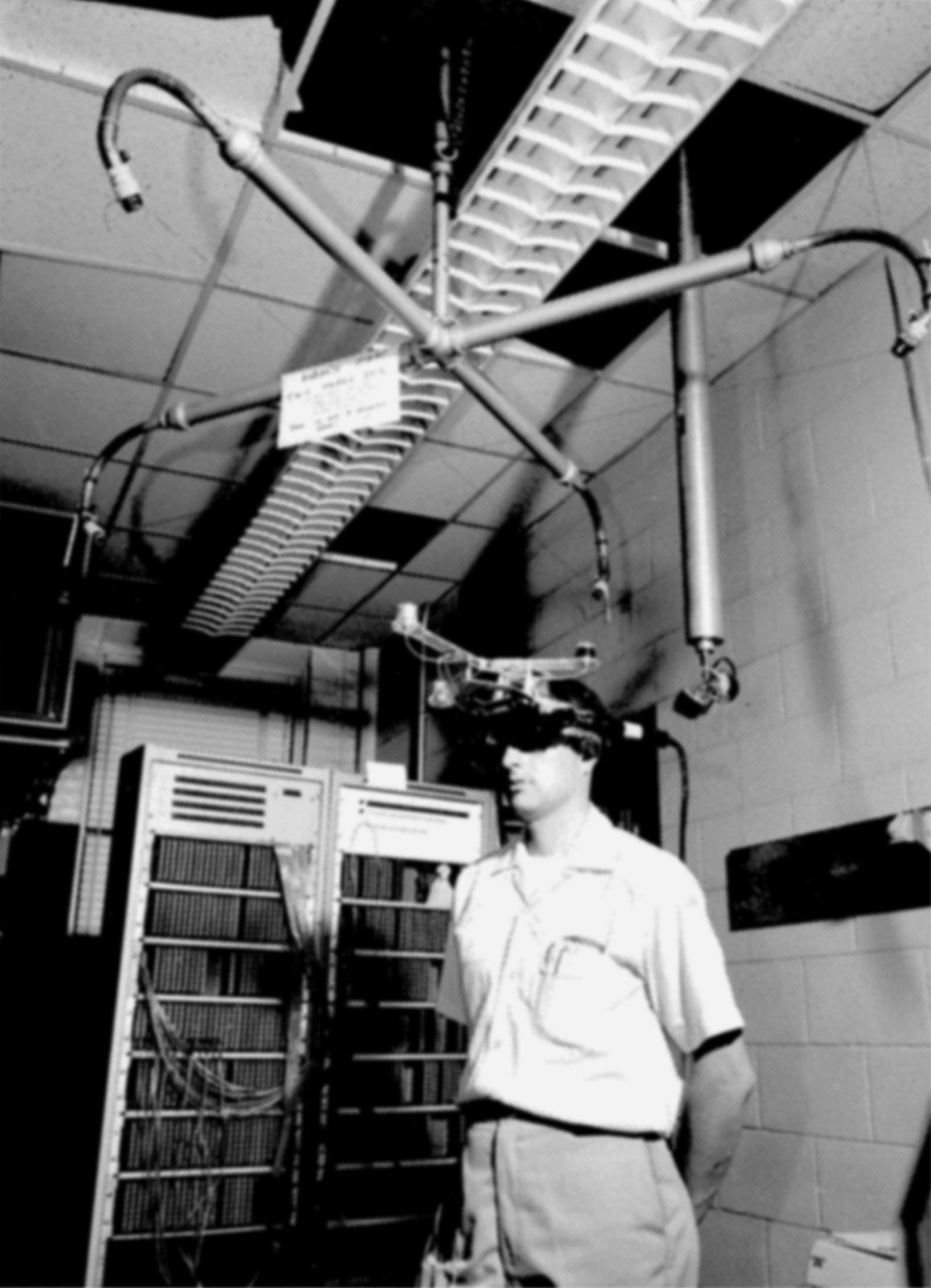
Early head-mounted display device developed by Ivan Sutherland at Harvard University, c. 1967.
Data gloves allow users to manipulate virtual objects by acting as an interface that tracks physical hand and finger movements and translates them into digital actions within a virtual reality system.1
These devices function through the following mechanisms:
- Movement Tracking: Data gloves use various sensors—such as optical flex-sensing devices or tactile and inertial sensors—to monitor the position and orientation of the user's hand and fingers in real time.1
- Translation: The system processes these physical gestures and converts them into corresponding interactions with computer-generated graphical objects, allowing the user to "grasp," move, or otherwise manipulate items in the virtual environment.1
- Haptic Feedback: Many modern data gloves incorporate haptic technology, which provides the user with physical sensations such as vibration, pressure, or temperature. This feedback is crucial for creating an immersive experience, as it allows the user to feel a physical response when interacting with virtual objects, characters, or surfaces.2
By bridging the gap between physical motion and digital response, data gloves enable more intuitive and interactive control than traditional controllers.21