
Britannica
Sources used in this answer
How did wood remain useful for building small boats despite its weaknesses?
Created from Britannica articles
using AI.
AI can make mistakes, so verify using Britannica articles.
boat
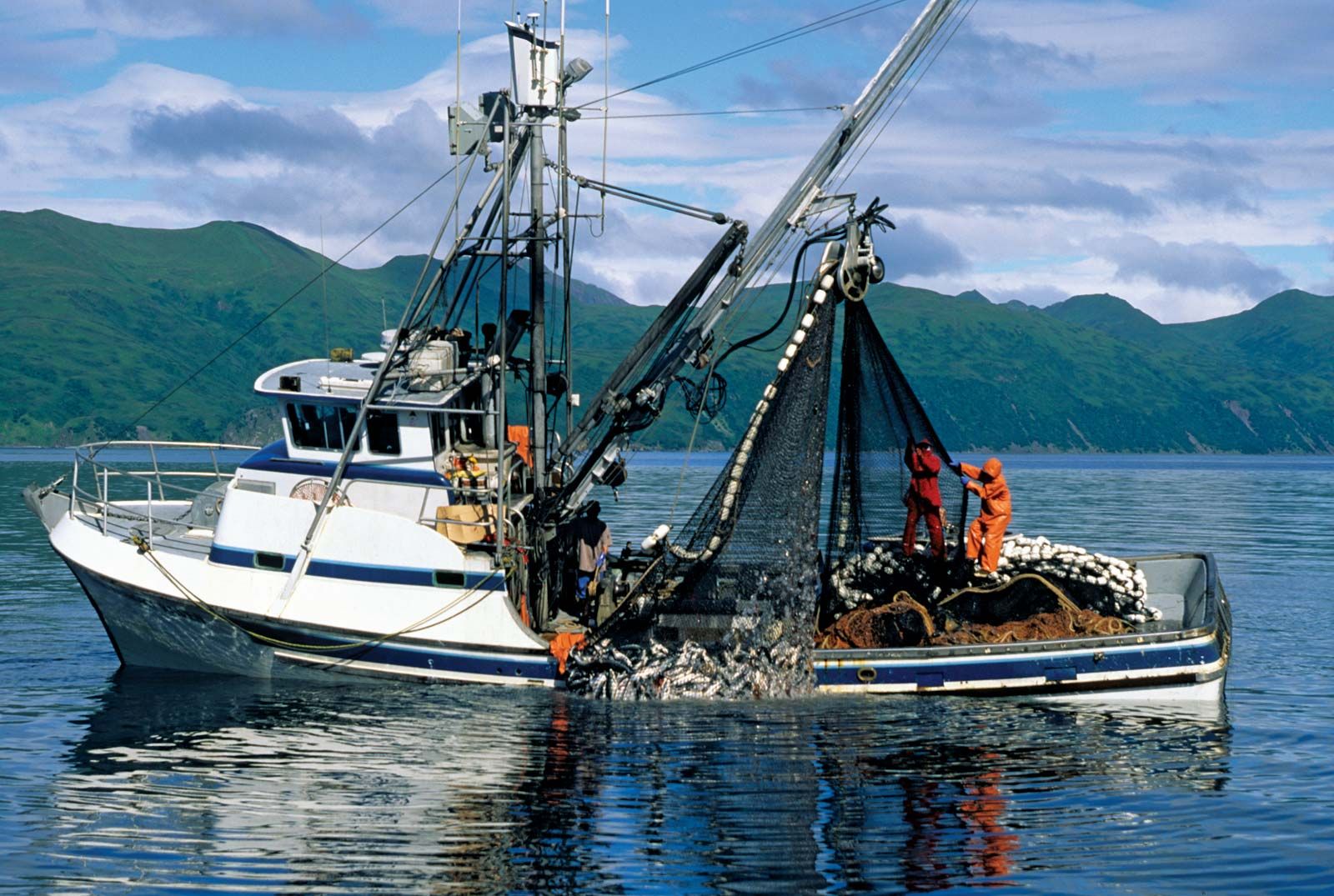
A commercial salmon-fishing boat in Alaska.
Wood has remained a valuable material for building small boats because it is easily handled and worked by local craftsmen using simple tools. Despite its inherent weaknesses—such as susceptibility to decay, moisture-related dimensional changes, and relatively low strength—it offers high strength-to-weight ratios and aesthetic appeal.12
To overcome its limitations, various techniques have been developed to enhance its utility:
- Structural Reinforcement: Historically, large wooden vessels used diagonal metal straps, hogging girders, or tie rods to prevent hull deformation and seam slippage.1
- Advanced Adhesives: The development of strong, waterproof glues has significantly improved the strength and stiffness of wooden structures.1
- Lamination: Building large, curved members from thin laminations allows for the use of shorter pieces of wood while largely eliminating natural imperfections like knots and splitting.1
- Plywood Construction: By gluing thin layers of veneer with grains running in different directions, builders can create molded plywood hulls that are stiff enough to maintain their shape without requiring complex internal frameworks.1
These innovations have allowed wood to remain a practical and enduring choice for small craft construction.1