
How did water-powered bellows improve medieval ironmaking?
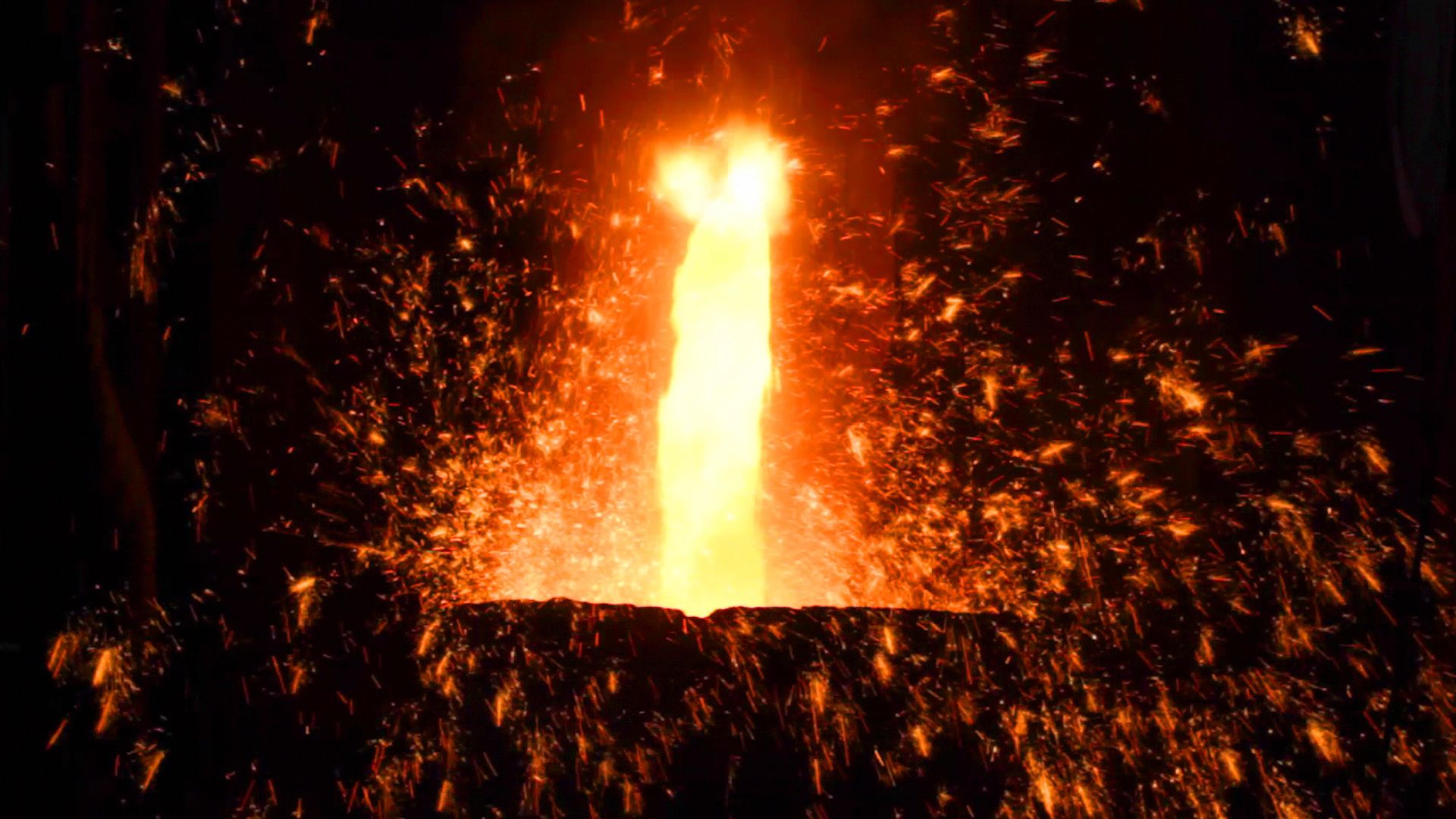
In medieval ironmaking, the transition to water-powered bellows was a critical technological advancement that enabled the development of the blast furnace.1
Previously, iron smelting relied on manual or foot-operated bellows, which limited the size of the furnace and the internal temperatures that could be achieved. By utilizing a waterwheel to drive the bellows, ironworkers could provide a continuous, powerful blast of air. This constant airflow significantly increased the internal temperature of the furnace, allowing the iron to reach a molten state rather than remaining a solid, spongy bloom.231
This innovation transformed the industry in two primary ways:
* Increased Scale: It allowed for the creation of much larger furnaces, as the mechanical power could sustain the necessary combustion levels for greater quantities of ore.1
* Production of Cast Iron: Because the furnace could reach higher temperatures, the iron became liquid, enabling it to be poured directly into molds. This led to the production of cast iron, which became essential for manufacturing items like cannon.1