
Britannica
Sources used in this answer
How did the NASA Virtual Visual Environment Display workstation work?
Created from Britannica articles
using AI.
AI can make mistakes, so verify using Britannica articles.
virtual reality
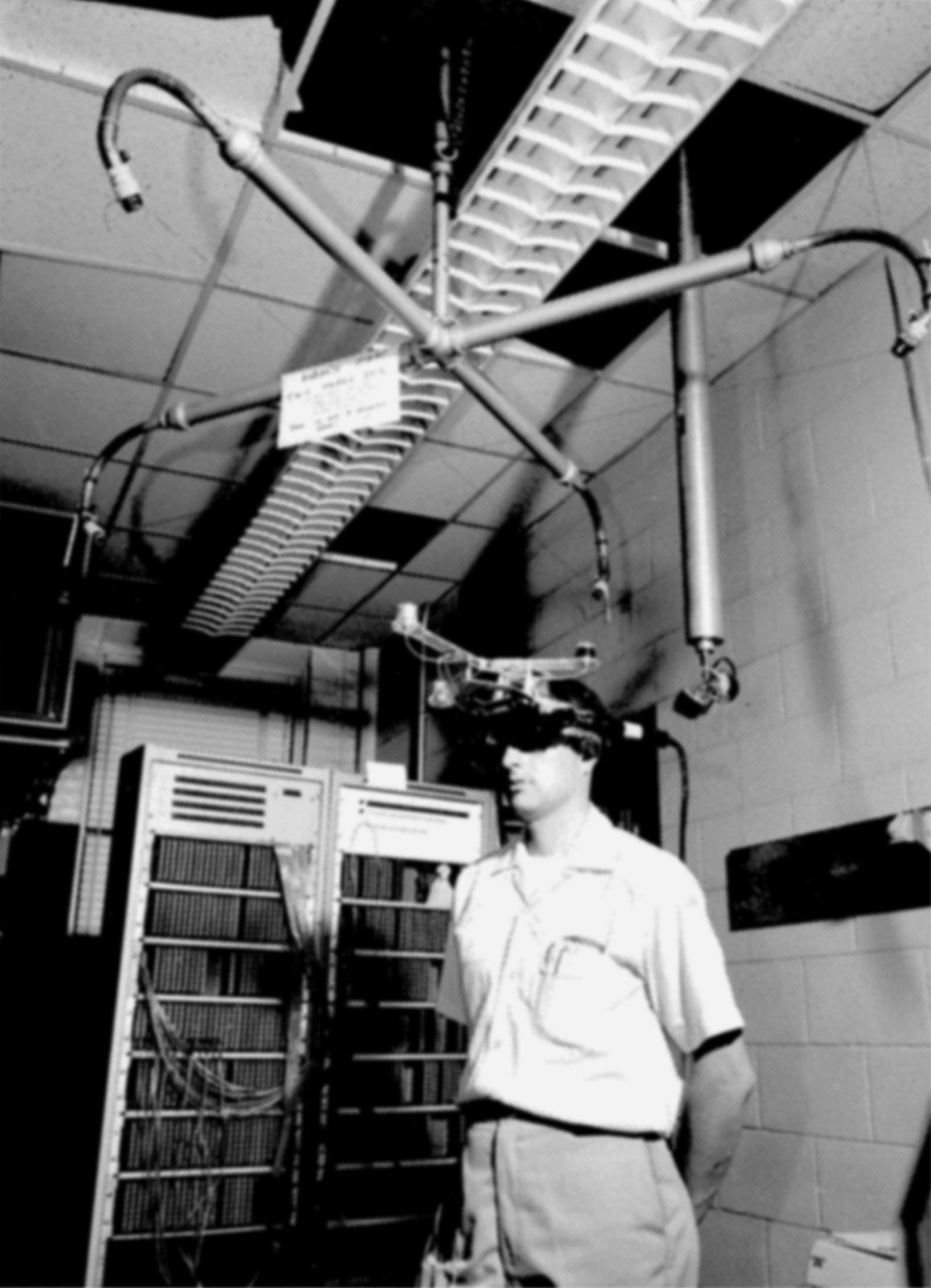
Early head-mounted display device developed by Ivan Sutherland at Harvard University, c. 1967.
The NASA Virtual Visual Environment Display (VVED) workstation, completed in 1985 at the Ames Research Center, was a foundational project in the development of virtual reality technology. Directed by Scott Fisher, the project aimed to create a low-cost, personal simulation environment that could support applications in telerobotics, space station automation, education, and scientific research.1
The VVED workstation functioned by integrating a standard suite of technologies designed to provide a multisensory, immersive experience. Its primary components included:
- Stereoscopic head-coupled display: A helmet-mounted unit that provided the user with a 3-D visual environment.1
- Head tracker: Sensors that monitored the user's head movements to adjust the displayed imagery in real time, maintaining the illusion of immersion.12
- Data glove: An input device that allowed the user to interact with and manipulate virtual objects through hand gestures.1
- Computer-generated imagery and 3-D audio: Systems that provided the visual and auditory components of the virtual environment.1
- Speech recognition: An interface that allowed for voice-based interaction with the system.1
By combining these elements, the VVED workstation established a technological standard for immersive virtual environments that influenced subsequent commercial and research efforts.1