
How did stepwells reach the underground water table?
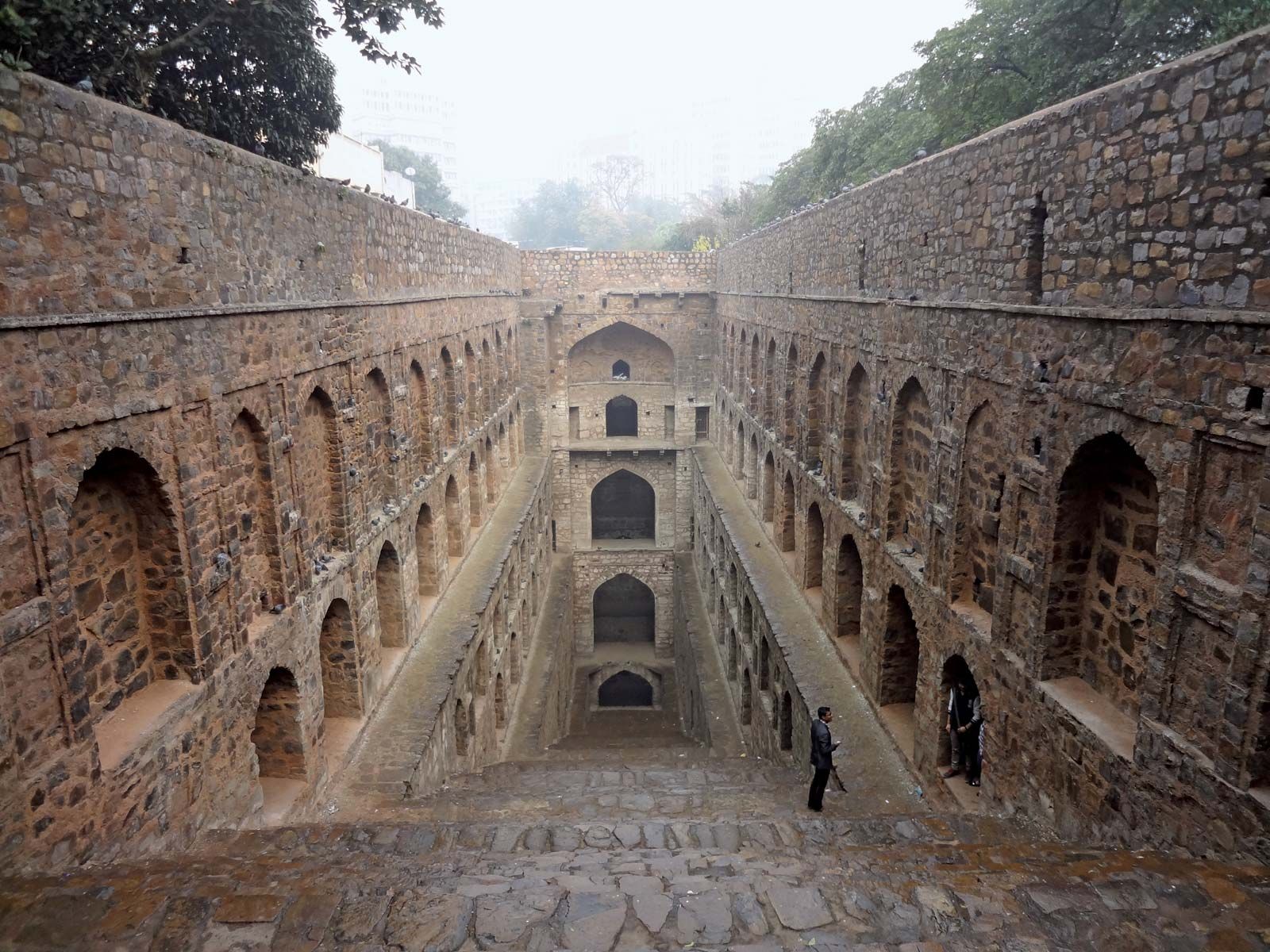
Stepwells reached the underground water table through a combination of deep excavation and precise engineering. The process typically involved boring a deep cylinder well to access the water table, which is the level where soil or rock is permanently saturated with water.1
To make this water accessible, builders created a wide, stone-lined, sloping excavation that featured a long staircase leading from the surface down to the water level. This design allowed users to reach the water even as its level fluctuated throughout the year. In dry seasons, individuals would descend the stairs—which could number over a hundred—to reach the bottom story. During the rainy season, the trench functioned as a large cistern, filling with water and sometimes submerging the steps.1
Many of these structures were built to accommodate the water table at significant depths, sometimes as far as 10 stories underground. By incorporating side ledges and covered pavilions, the architecture provided both access to the water and structural support against the pressure of the surrounding earth.1