
Britannica
Sources used in this answer
How did stepwells provide water throughout the year in arid parts of India?
Created from Britannica articles
using AI.
AI can make mistakes, so verify using Britannica articles.
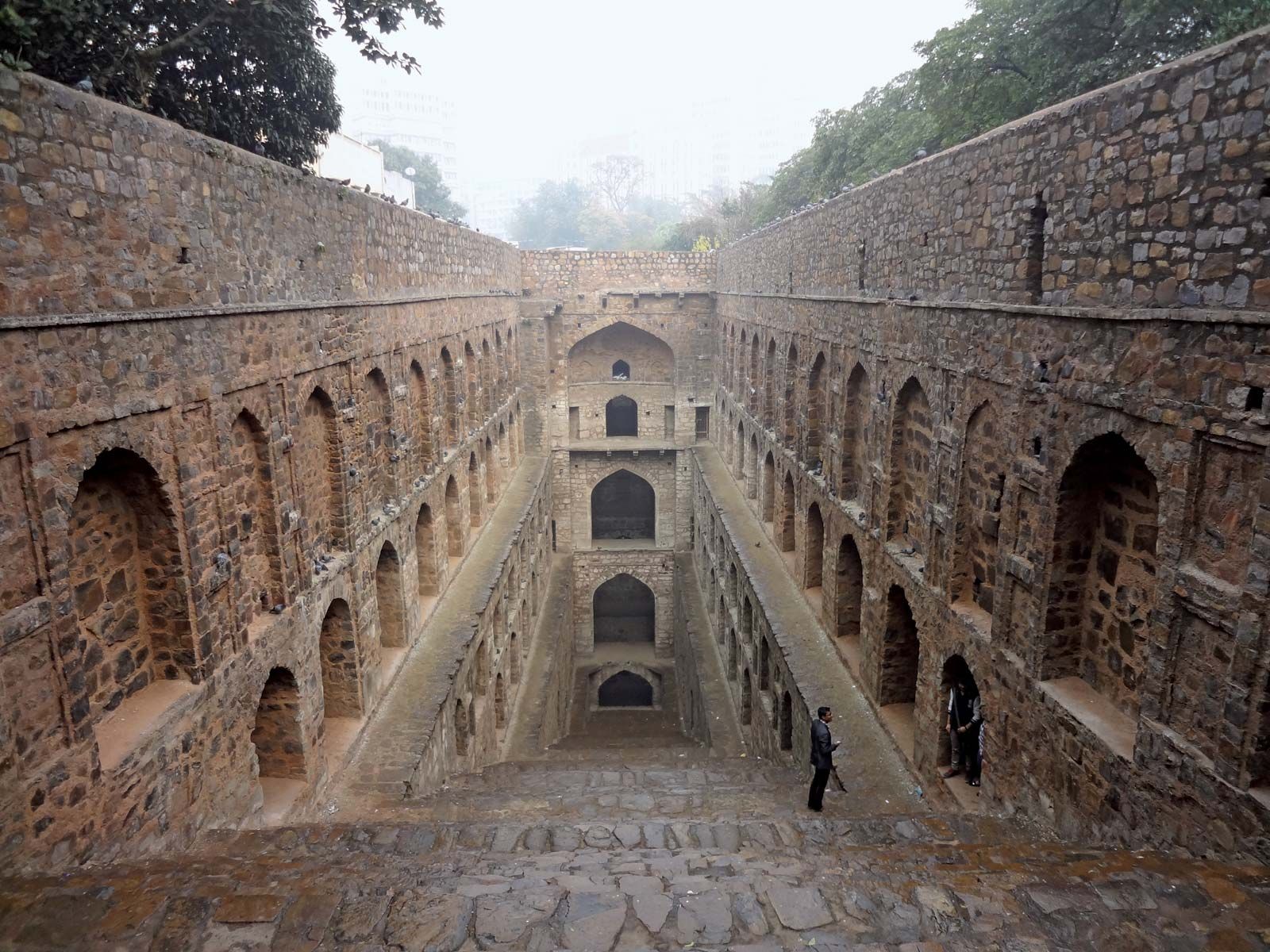
stepwell
Agrasen ki Baoli, Delhi, India.
Stepwells in arid regions of India functioned as ingenious engineering solutions to ensure a year-round water supply despite a climate that alternates between extreme drought and heavy monsoonal rains.1
These structures were excavated deep underground to reach the water table, which could be as far as 10 stories below the surface. Their design allowed for two primary methods of water management:1
- Dry Season Access: During the dry months, the water level would drop, and users would descend a long, stone-lined staircase to reach the water, which flowed into the structure through an opening in a cylinder well.1
- Rainy Season Storage: During the monsoon, the wide, sloping excavation transformed into a large cistern. This allowed the structure to fill to capacity, sometimes submerging the stairs entirely to store water for later use.1
By combining a deep-reaching well with a massive, stepped reservoir, these structures provided a reliable source of water for drinking, irrigation, and bathing, while also offering a cool, subterranean sanctuary for travelers and local communities.1