
How did staircases help people use stepwells when water levels changed?
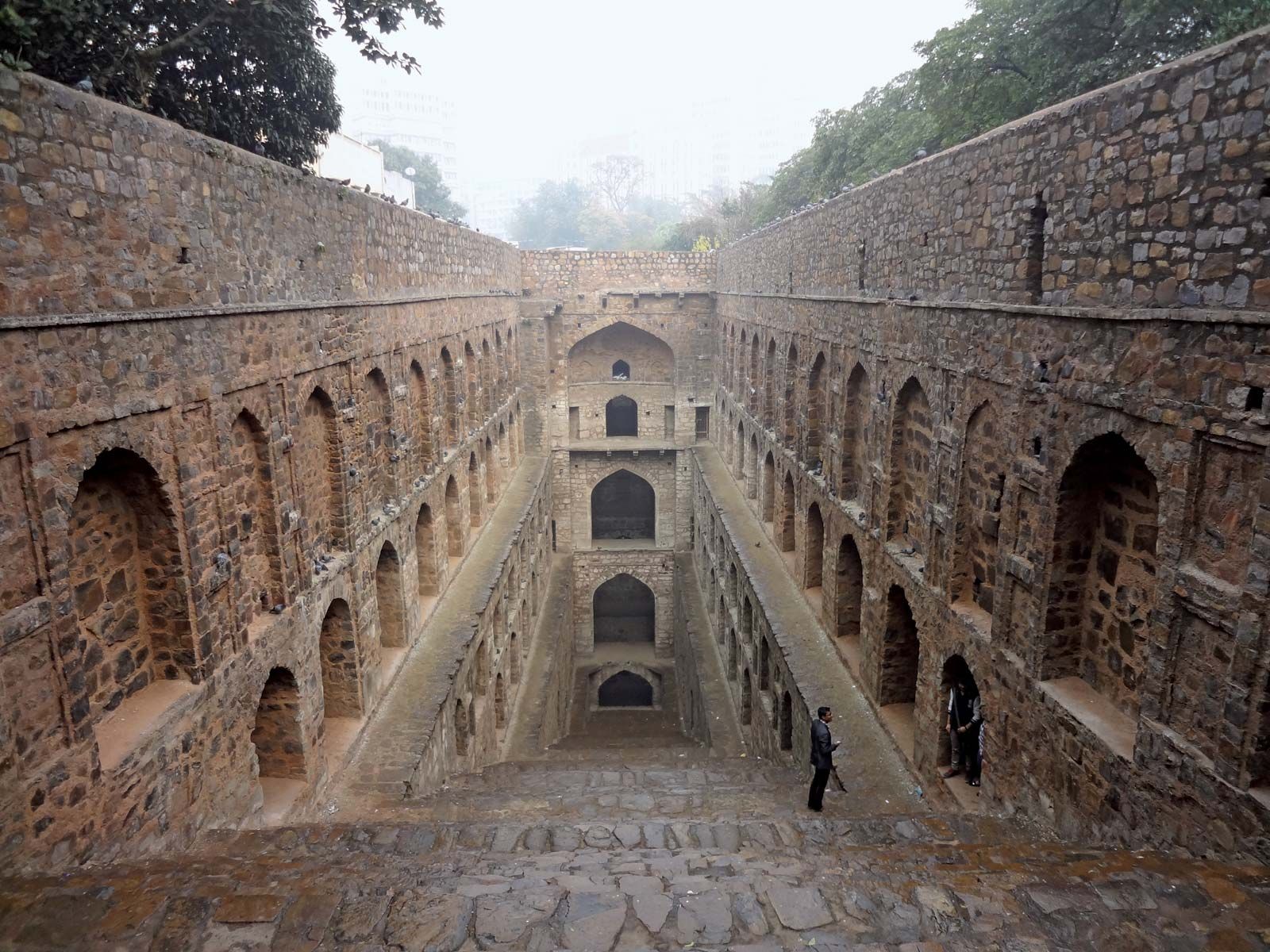
Stepwells were engineered with long, sloping staircases to provide consistent access to water despite the significant fluctuations caused by India's monsoonal climate.1
During the dry season, when the water table dropped, the stairs—which could number more than a hundred—allowed people to descend multiple stories to reach the water at the bottom of the well. Conversely, during the rainy season, the excavation trench functioned as a large cistern; as it filled to capacity, the water level rose, eventually submerging the steps and sometimes reaching the surface of the land.1
Additionally, many stepwells featured covered pavilions at successive levels. These were accessed via ledges as the water rose, providing vital shade for users while also serving to buttress the walls against the intense pressure of the surrounding earth.1