
How did early bowl furnaces produce blooms of iron?
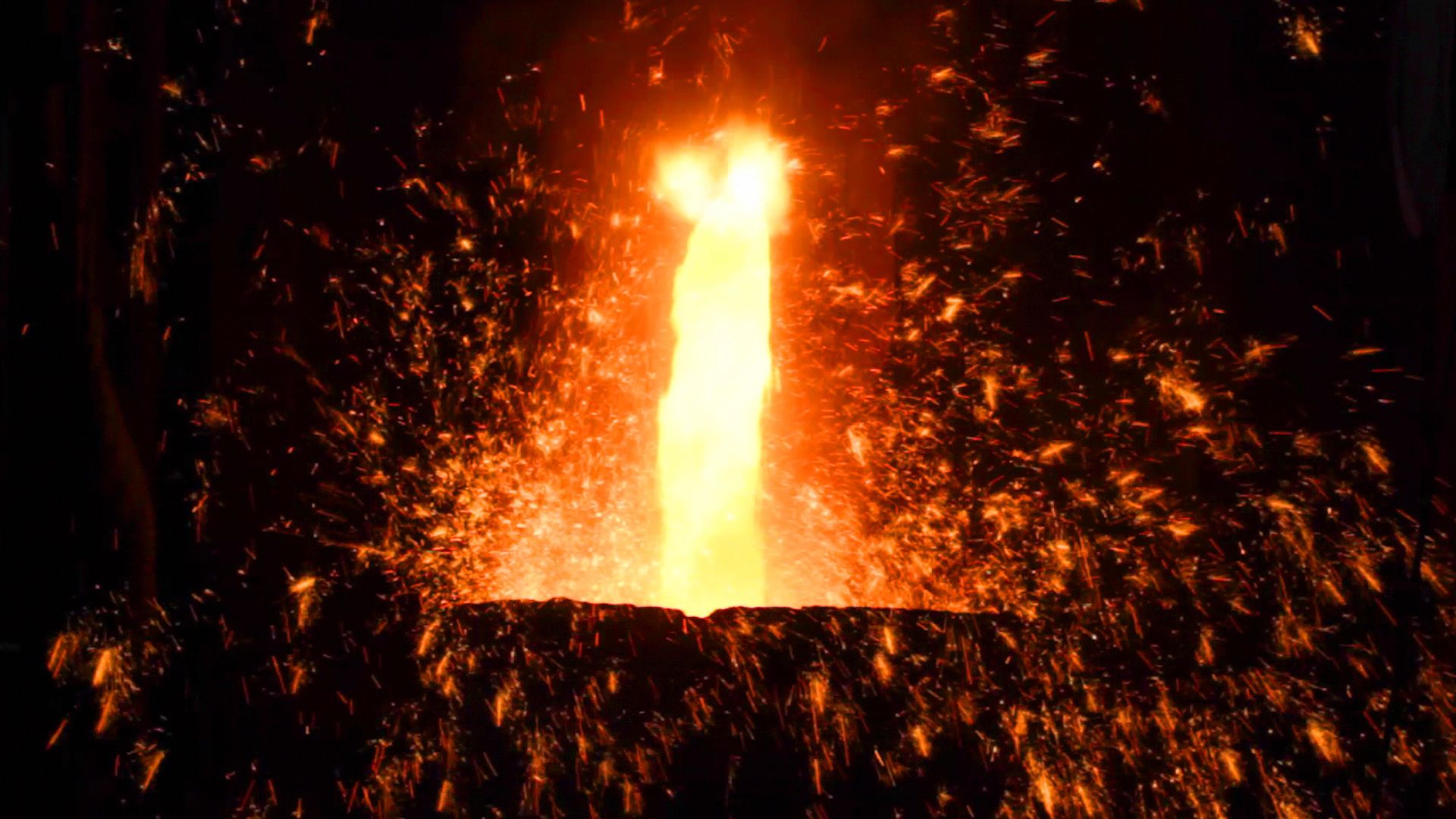
Early bowl furnaces produced iron through a direct smelting process known as the bloomery process. These furnaces were constructed by digging a small hole in the ground and utilizing a pipe or tuyere to introduce air from a bellows into the hearth.1
To create a bloom, a bed of red-hot charcoal was established, to which iron ore mixed with additional charcoal was added. As the ore underwent chemical reduction, the furnace temperature remained below the melting point of pure iron—typically not exceeding 1,150° C (2,100° F). Consequently, the iron did not liquefy but instead formed a solid, spongy mass of pasty metal globules intermingled with slag and charcoal pieces.21
This resulting lump, or bloom, was then removed from the furnace and subjected to repeated reheating and hot hammering to expel the entrapped slag, ultimately producing wrought iron.21