
Britannica
Sources used in this answer
How did Project GROPE use haptic feedback to study molecular interactions?
Created from Britannica articles
using AI.
AI can make mistakes, so verify using Britannica articles.
virtual reality
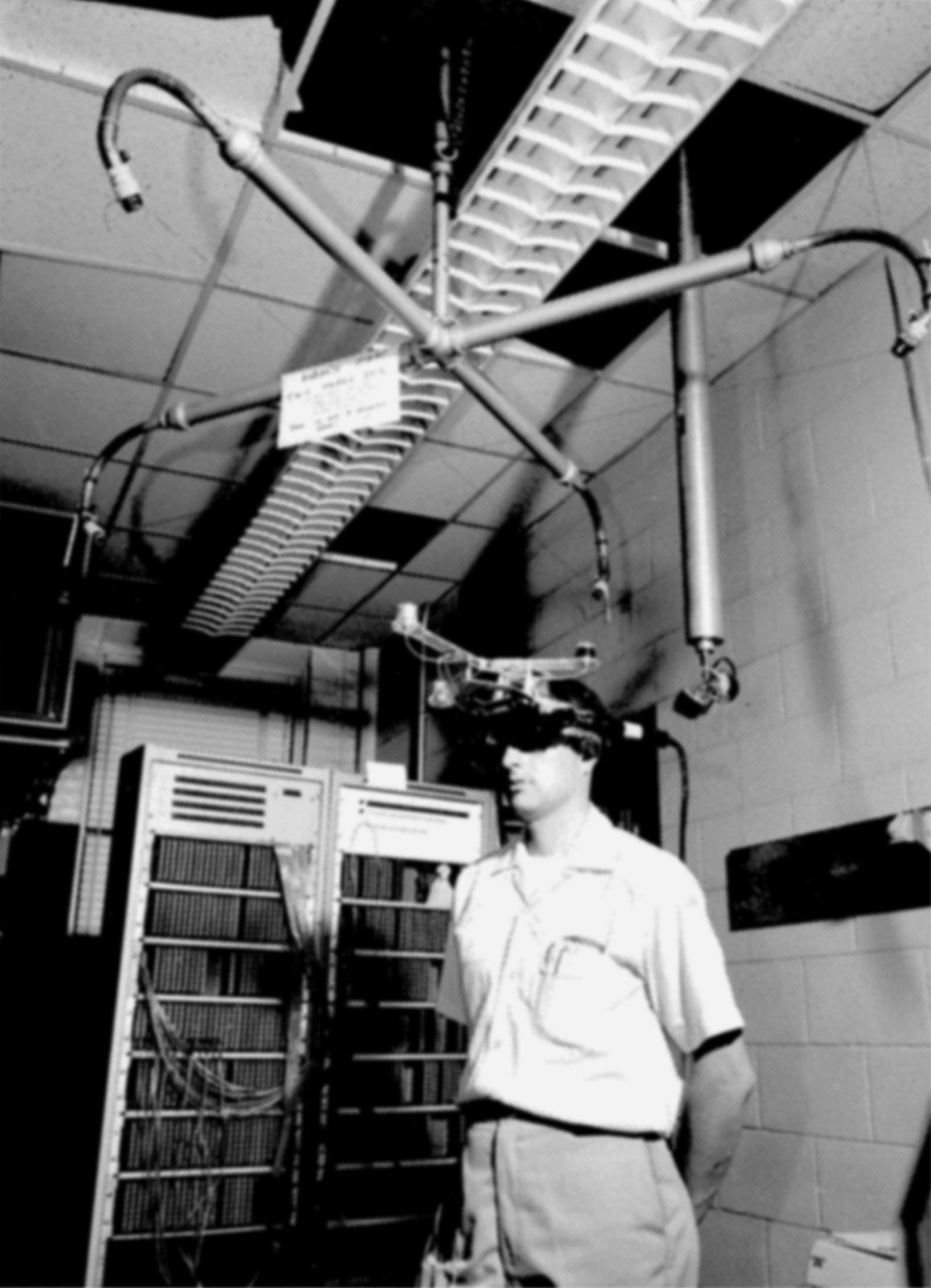
Early head-mounted display device developed by Ivan Sutherland at Harvard University, c. 1967.
Project GROPE, initiated in 1967 at the University of North Carolina by Frederick Brooks, utilized haptic feedback to advance the study of molecular biology by allowing scientists to interact with virtual molecular models.1
To study the interaction between a drug molecule and its receptor site on a protein, the system employed the following methods:
- Visual Representation: The system used wire-frame imagery to depict both the molecules and the physical forces acting upon them.1
- Haptic Feedback: Researchers used special hand-grip devices that provided tactile feedback, enabling them to "feel" the forces involved in molecular docking.1
- Manipulation: By "grasping" these virtual situations, scientists could physically maneuver the molecules to find a minimum binding energy configuration.1
This approach allowed researchers to explore the virtual world of molecular forces as if they were navigating a physical environment, ultimately helping them hypothesize new drugs based on their direct manipulations of the virtual models.1