
How did Henry Cort’s puddling furnace remove carbon from pig iron?
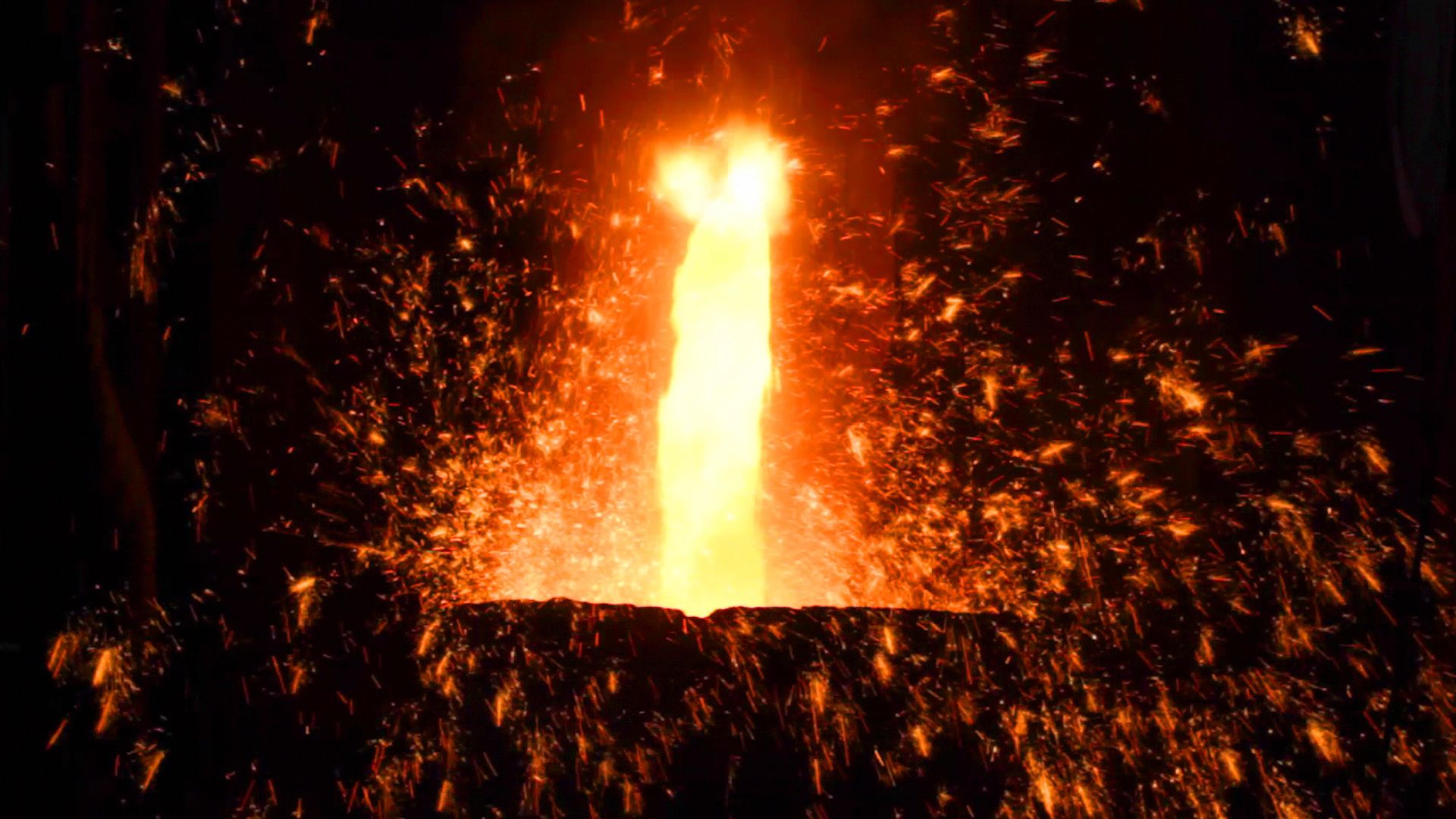
Henry Cort’s puddling process, patented in 1784, removed carbon from pig iron by utilizing a reverberatory furnace. In this furnace, the metal was heated by flames and hot gases swirling above it, preventing direct contact with the fuel.1
To facilitate the removal of carbon, iron oxide was added to the molten pig iron to create a slag. The ironmaster then manually agitated or stirred the "puddle" of metal. This constant stirring, combined with the circulating air within the furnace, caused the carbon—along with silicon, phosphorus, and manganese—to be removed through oxidation. As the carbon content decreased, the melting point of the iron rose, causing the metal to become semisolid while the slag remained fluid. The resulting iron was then formed into balls and removed from the furnace for further processing.12