
Britannica
Sources used in this answer
How could stepwell layouts differ in shape and number of entrances?
Created from Britannica articles
using AI.
AI can make mistakes, so verify using Britannica articles.
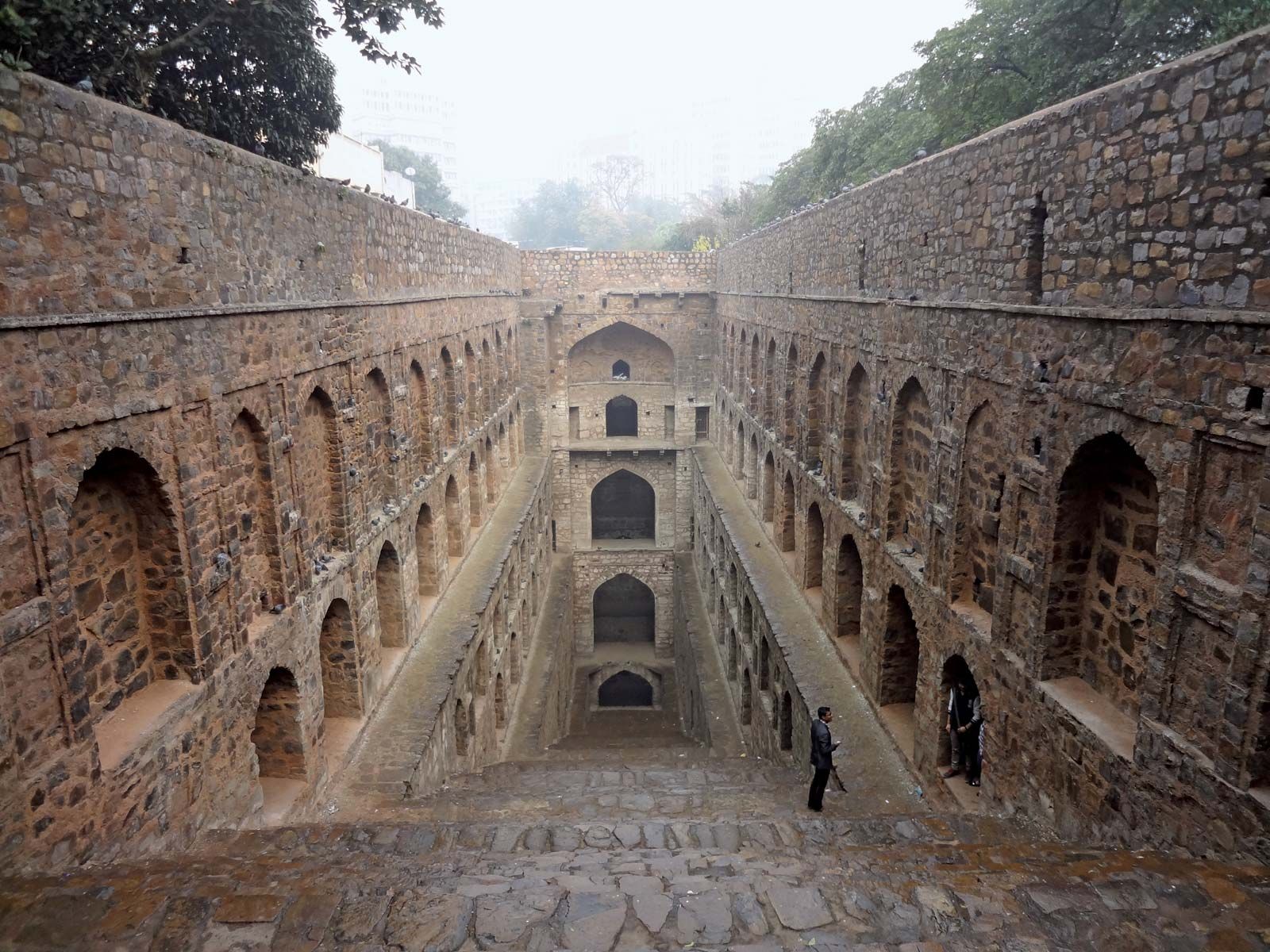
stepwell
Agrasen ki Baoli, Delhi, India.
Stepwell layouts in India were highly diverse, reflecting the unique requirements of their location, purpose, and the era in which they were commissioned. Because no two stepwells are identical, their architectural forms varied significantly in both shape and accessibility.1
Variations in Layout and Entrances
- Shape: Stepwells were not limited to a single geometric form; they could be constructed as rectangular, circular, or even L-shaped structures.1
- Entrances: The number of entry points was another variable feature of their design. While many were simpler in their configuration, some complex stepwells featured as many as four separate entrances to accommodate traffic and access. For instance, the Rudabai Vav is noted for its rarity in having three separate entrances.1
These subterranean edifices were engineered to reach the water table, often narrowing from the surface to the lowest tier. Their design was influenced by the cultural and religious traditions of their patrons, with Hindu structures often serving as temples and Islamic versions incorporating arches and domes.1