
Britannica
Sources used in this answer
How are molten iron and slag removed from a blast furnace?
Created from Britannica articles
using AI.
AI can make mistakes, so verify using Britannica articles.
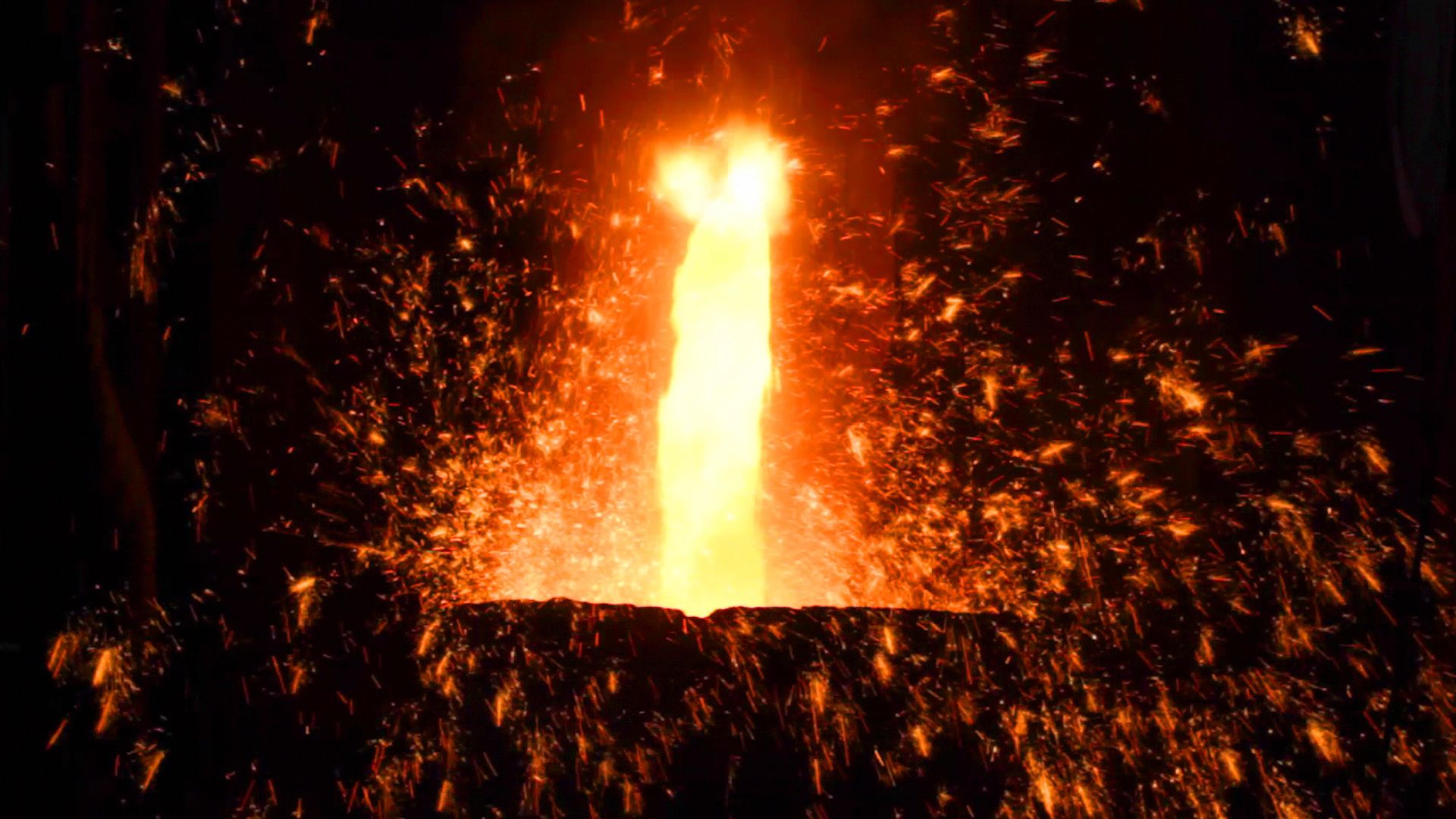
iron processing
Iron ore is one of the most abundant elements on Earth, and one of its primary uses is in the production of steel. When combined with carbon, iron changes character completely and becomes the alloy steel.
In a blast furnace, molten iron and slag accumulate in the hearth at the bottom of the furnace.1
The removal process, known as tapping, is performed as follows:
- Molten Iron: This is drawn off through a taphole located at the bottom of the furnace at regular intervals.21
- Slag: Because slag is less dense than iron, it floats on top of the molten metal. It is removed through a separate slag hole positioned higher up on the hearth than the iron taphole. In some furnace operations, however, the slag may leave through the same taphole as the iron.21
Once tapped, the liquid iron and slag are typically directed through troughs in a cast house into appropriate ladles for transfer to steelmaking facilities or slag-reclamation areas.1