
Britannica
Sources used in this answer
How are gyroscopes used in inertial guidance systems?
Created from Britannica articles
using AI.
AI can make mistakes, so verify using Britannica articles.
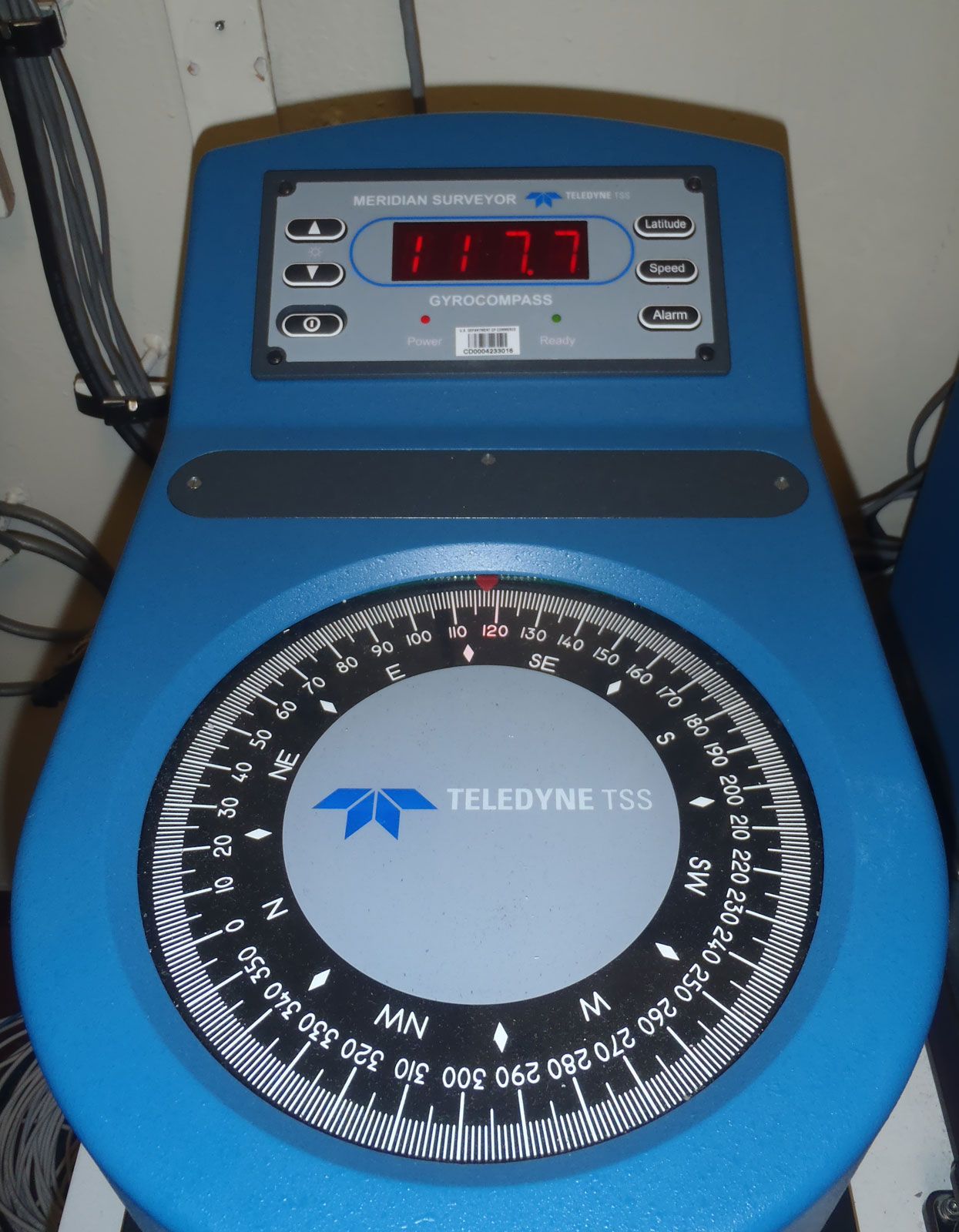
gyrocompass
The gyrocompass aboard the National Oceanic and Atmospheric Administration's (NOAA) ship Rainier. Gyrocompasses are navigational instruments that use a continuously driven gyroscope to accurately seek the direction of true (geographic) north.
In inertial guidance systems, gyroscopes serve as critical components for monitoring a vehicle's orientation and motion, functioning differently than a gyrocompass, which is specifically designed to seek true north using Earth's rotation and gravity.12
In inertial guidance, gyroscopes are utilized in two primary configurations:
- Gimbaling Systems: Three gyroscopes are mounted on gimbals to establish a stable frame of reference for the vehicle's roll, pitch, and yaw. This platform remains stable regardless of the vehicle's maneuvers, allowing accelerometers to measure velocity changes in those fixed directions.1
- Strapdown Systems: The gyroscopes are rigidly mounted to the vehicle's body axes. Instead of maintaining a stable platform, they sense the vehicle's instantaneous turning rates. A computer then combines these turning rates with accelerometer data to calculate the vehicle's trajectory.1
Modern systems often employ ring laser gyroscopes or fibre-optic gyroscopes, which use the Sagnac effect to measure rotation without moving parts.13