
Britannica
Sources used in this answer
How are deadweight and lightship weight used to calculate a ship’s displacement?
Created from Britannica articles
using AI.
AI can make mistakes, so verify using Britannica articles.
naval architecture
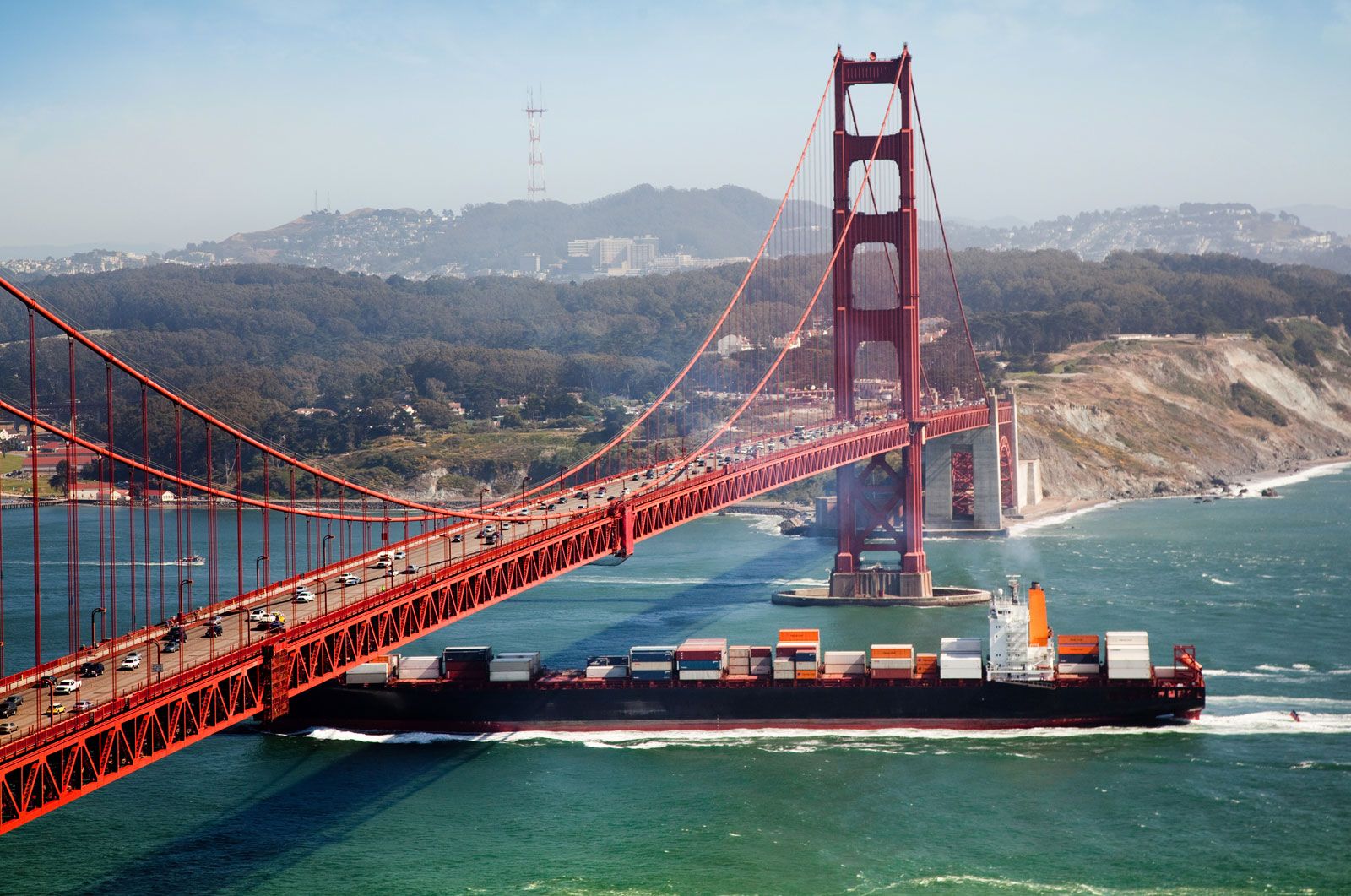
A cargo ship passing the Golden Gate Bridge, near San Francisco.
In naval architecture, the calculation of a ship’s displacement—the total weight of the water the vessel must displace to float—is fundamentally determined by the sum of two primary weight categories:12
- Deadweight: This represents the total weight of the cargo, fuel, lubricating oil, crew, and necessary supplies or consumable stores.12
- Lightship Weight (or Lightweight): This includes the weight of the ship’s structure (hull steel), propulsion machinery, non-propulsive hull engineering, and fixed outfitting items related to crew life support.12
The naval architect must design the vessel’s dimensions and hull form such that the resulting displacement equals the combined total of the deadweight and the lightship weight. Because the weight of the water displaced must equal the total weight of the ship, the design process involves a continuous effort to predict and balance these weights to ensure the vessel achieves the intended draft and stability.12