
How are alternating current and direct current used differently in electric-power systems?
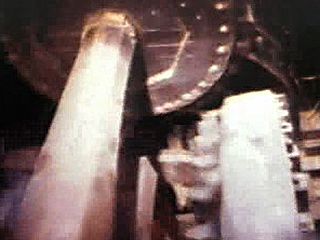
The ingenuity people used in harnessing waterpower can be seen in this medieval-style mill. The waterwheel is turned by a stream and is connected to a shaft that leads into the building. At the other end of the shaft is a gear. The connection of a series of gears translates the power from the stream to a shaft that drives a millstone, which grinds flour from grain.
(30 sec; 1.84MB)
In electric-power systems, alternating current (AC) and direct current (DC) serve distinct roles based on their efficiency in transmission and their specific application requirements.
Alternating Current (AC)
AC is the standard for domestic and commercial power distribution because it can be easily transformed to high voltages, which minimizes energy loss during long-distance transmission. Using transformers, power companies step up voltage for transmission and step it down to safe levels (such as 120V or 220V) for end-users.1
Direct Current (DC)
While DC was historically limited by transmission challenges, modern technology allows for efficient long-distance DC transmission, which is sometimes preferred over AC for specific high-capacity applications. DC is essential for:23
* Specialized Industrial Processes: Applications like electroplating require the steady, unidirectional flow of charge provided by DC.3
* Power Conversion: Thyristors are used to convert power between AC and DC, enabling the integration of DC transmission lines into broader power grids.2
* Energy Storage: DC is the natural output of batteries and fuel cells.3
Ultimately, while AC dominates final distribution, modern power systems frequently employ both, using power electronics to convert between the two as needed.23