
Britannica
Sources used in this answer
Why should burned hands be raised above the level of the heart?
Created from Britannica articles
using AI.
AI can make mistakes, so verify using Britannica articles.
burn
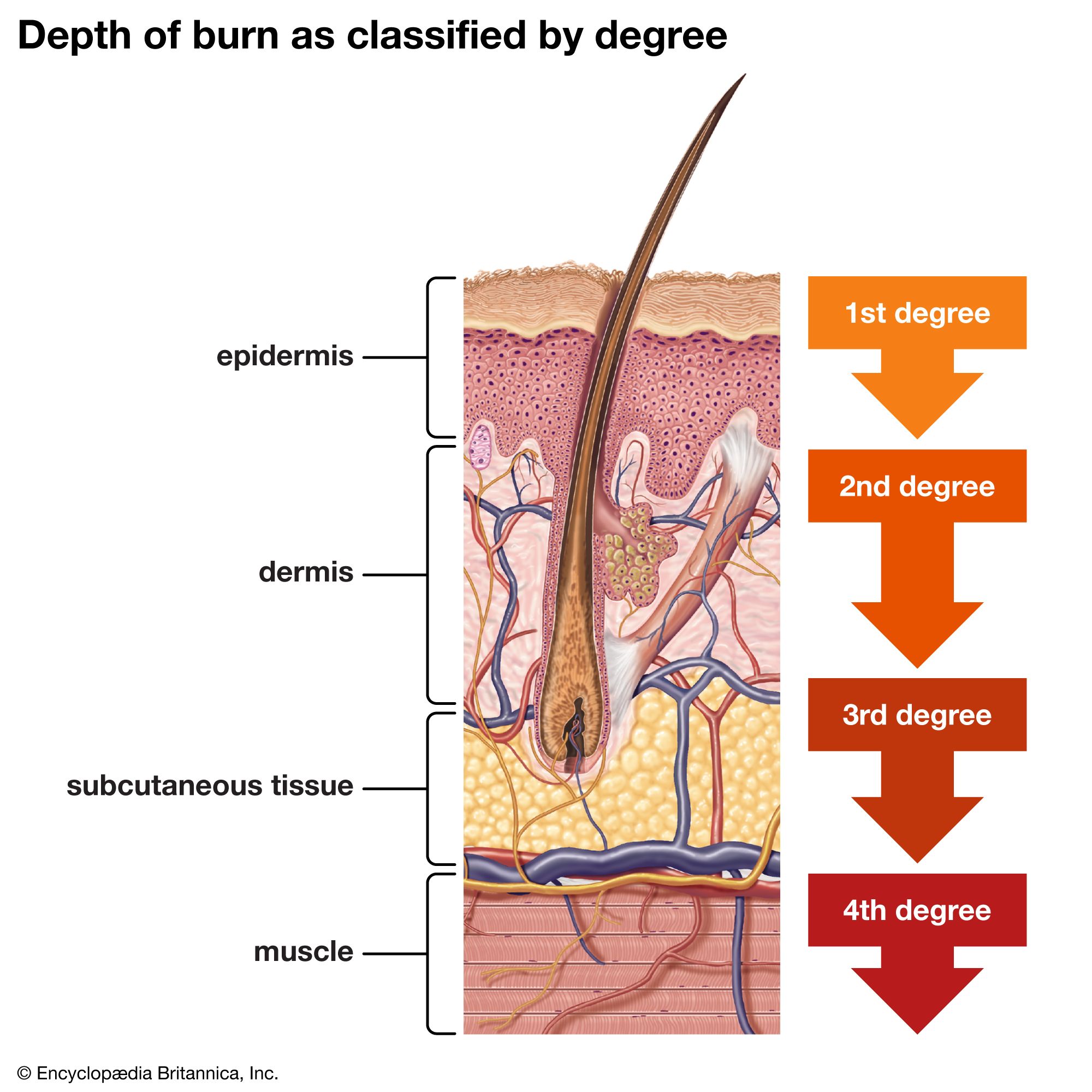
This diagram shows how burn injuries are classified by severity. First-degree burns damage the outer skin, known as the epidermis. First-degree burns are the least severe form of burn injury. Second-degree burns damage the outer skin and some of the underlying skin, known as the dermis, which also includes some connective tissue. Third-degree burns damage all the layers of skin, including subcutaneous tissue. Fourth-degree burns, which are the most severe, destroy every layer of skin and also damage muscle, tendons, and bones.
When treating a burn, it is important to raise burned hands above the level of the heart to help reduce swelling and manage the circulatory response to the injury. Elevating the affected area uses gravity to assist in draining fluid away from the site, which helps minimize the discomfort and tissue pressure associated with the inflammatory response following a severe burn.1
For any third-degree burn, it is essential to seek professional medical attention immediately, as these are considered true medical emergencies. While waiting for help, you should cover the injury with a sterile dressing or clean linens, but avoid applying any ointments, salves, or sprays, as these can cause further harm.1