
Britannica
Sources used in this answer
Why is smoke inhalation dangerous after a fire?
Created from Britannica articles
using AI.
AI can make mistakes, so verify using Britannica articles.
burn
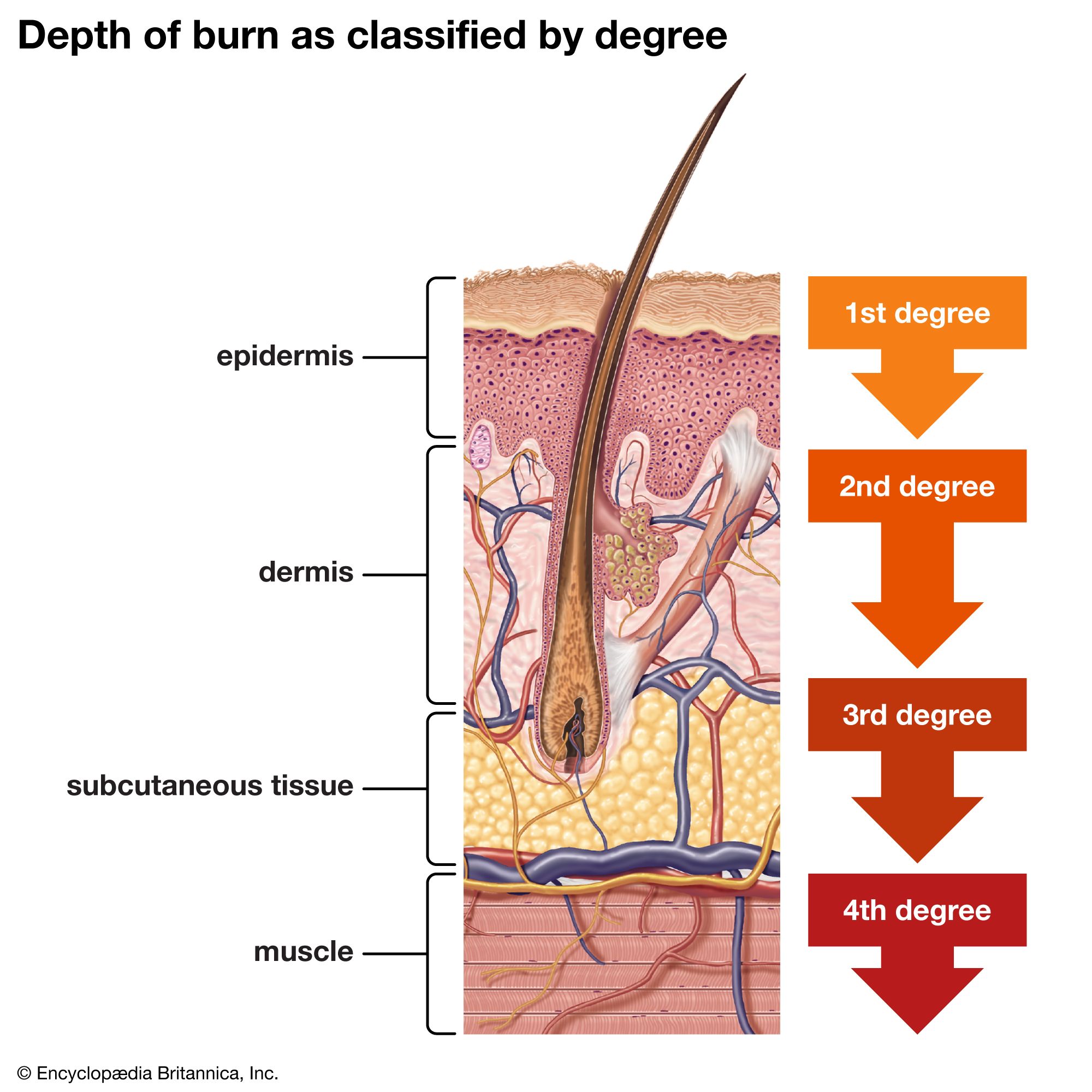
This diagram shows how burn injuries are classified by severity. First-degree burns damage the outer skin, known as the epidermis. First-degree burns are the least severe form of burn injury. Second-degree burns damage the outer skin and some of the underlying skin, known as the dermis, which also includes some connective tissue. Third-degree burns damage all the layers of skin, including subcutaneous tissue. Fourth-degree burns, which are the most severe, destroy every layer of skin and also damage muscle, tendons, and bones.
Smoke inhalation is a serious injury caused by breathing in the products of combustion during a fire, and it is a major cause of death in burn patients. It is dangerous primarily due to three factors:12
- Direct Airway Injury: The inhalation of dry heat and soot can cause immediate damage to the respiratory tract, leading to inflammation and obstruction.1
- Carbon Monoxide Poisoning: Smoke often contains carbon monoxide, a colorless and odorless gas. It binds to hemoglobin in the blood much more effectively than oxygen, preventing the delivery of oxygen to vital tissues and potentially causing coma or death.134
- Respiratory Complications: Smoke inhalation can trigger severe secondary issues, including pulmonary edema (fluid in the lungs), bacterial pneumonia, and respiratory failure.1
Because these injuries can be life-threatening, individuals exposed to smoke often require immediate medical evaluation, such as a bronchoscopic examination, and may need supplemental oxygen or mechanical ventilation to maintain lung function and oxygen levels.1