
Britannica
Sources used in this answer
Why is liquid water considered important in the search for Earth-like life?
Created from Britannica articles
using AI.
AI can make mistakes, so verify using Britannica articles.
extraterrestrial life
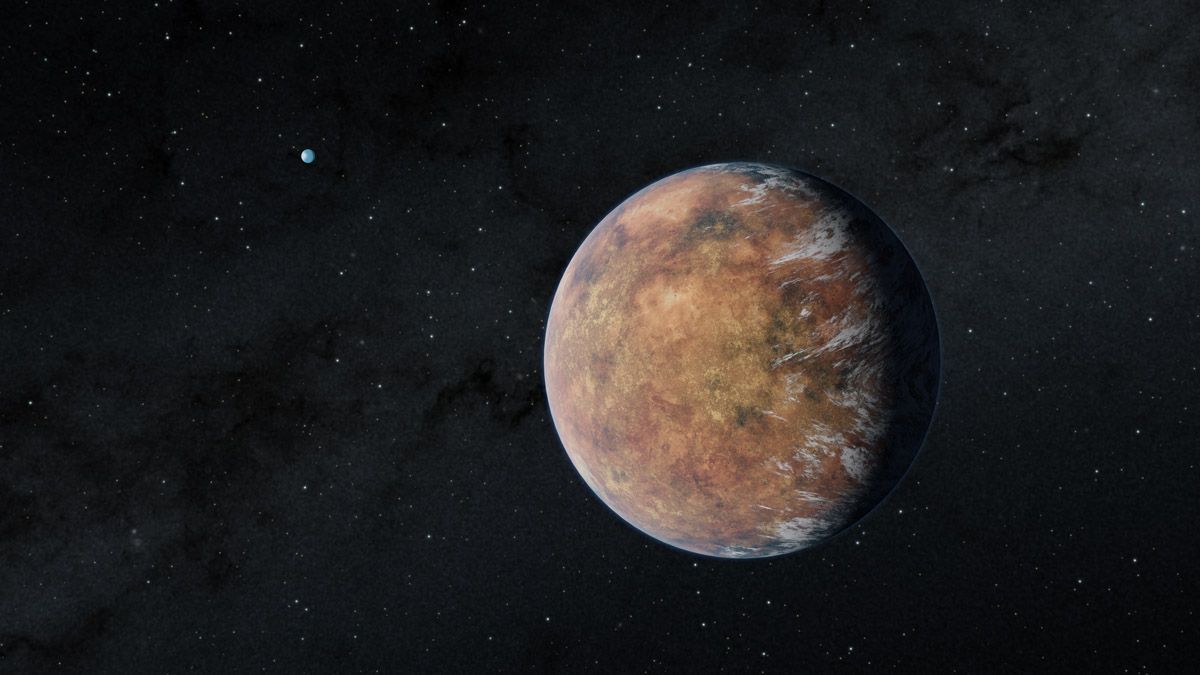
An illustration of the Earth-size planet TOI 700e orbiting within the habitable zone of its star. The habitable zone is the area around a star where liquid water, and thus possibly life, can survive on a planet's surface. Its Earth-size sibling, TOI 700d, can be seen in the distance.
In the field of astrobiology, liquid water is considered a fundamental requirement for life because all known life on Earth depends on it. This reliance serves as the primary basis for defining a habitable zone—the orbital region around a star where a planet can maintain liquid water on its surface.1
Water is essential for biological processes due to its unique chemical properties:
- Universal Solvent: As a polar molecule, water can dissolve a wide range of substances, including salts, ions, sugars, and amino acids, facilitating the transport of nutrients and waste within organisms.2
- Biochemical Medium: It provides an ideal environment for metabolic reactions. Its ability to stabilize ions and interact with proteins helps maintain the structural integrity and function of enzymes.2
- Direct Participation: Water acts as a reactant in critical biological processes, such as hydrolysis, which breaks down complex nutrients into usable forms.2
Because these functions are vital for cellular metabolism and survival, scientists hypothesize that extraterrestrial life would likely share this requirement for liquid water.12