
Why does bismuth remain with other metals during most smelting operations?
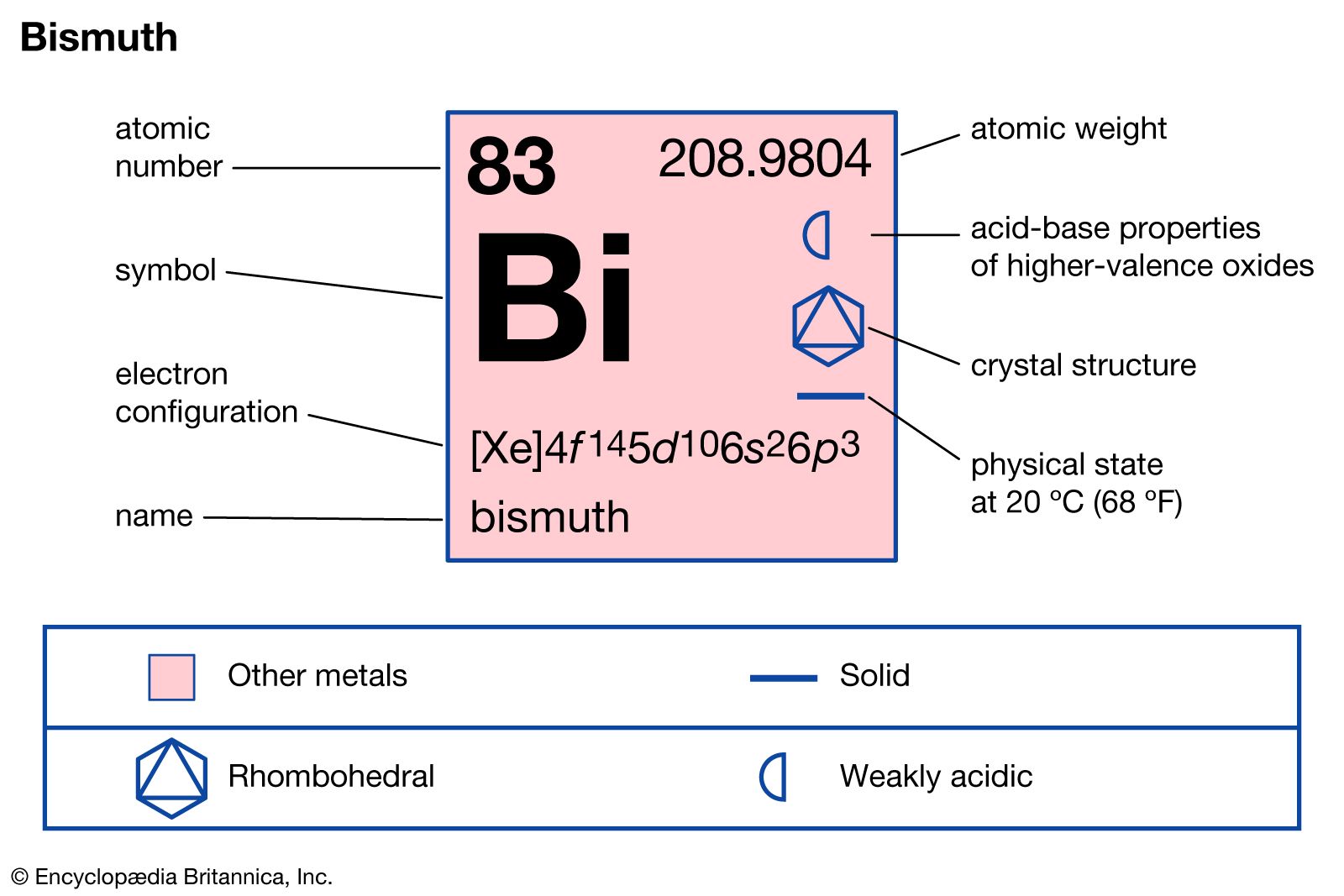
Bismuth is a chemical element that is volatile at high temperatures; however, it typically remains with other metals during most smelting operations because it does not readily separate from them under standard smelting conditions.1
Because bismuth behaves similarly to the metals with which it is associated in ores—such as lead, copper, tin, silver, and gold—it is usually recovered as a by-product during the subsequent refining stages rather than during the initial smelting process. For example, in the refining of lead bullion, bismuth remains with the lead until it is specifically removed using specialized techniques like the Betterton-Kroll process, which involves adding calcium and magnesium to form compounds that can be skimmed off as dross. Similarly, in the electrolytic refining of copper, bismuth is left behind as a component of the anode sludge.123