
Why do second-degree burns form blisters?
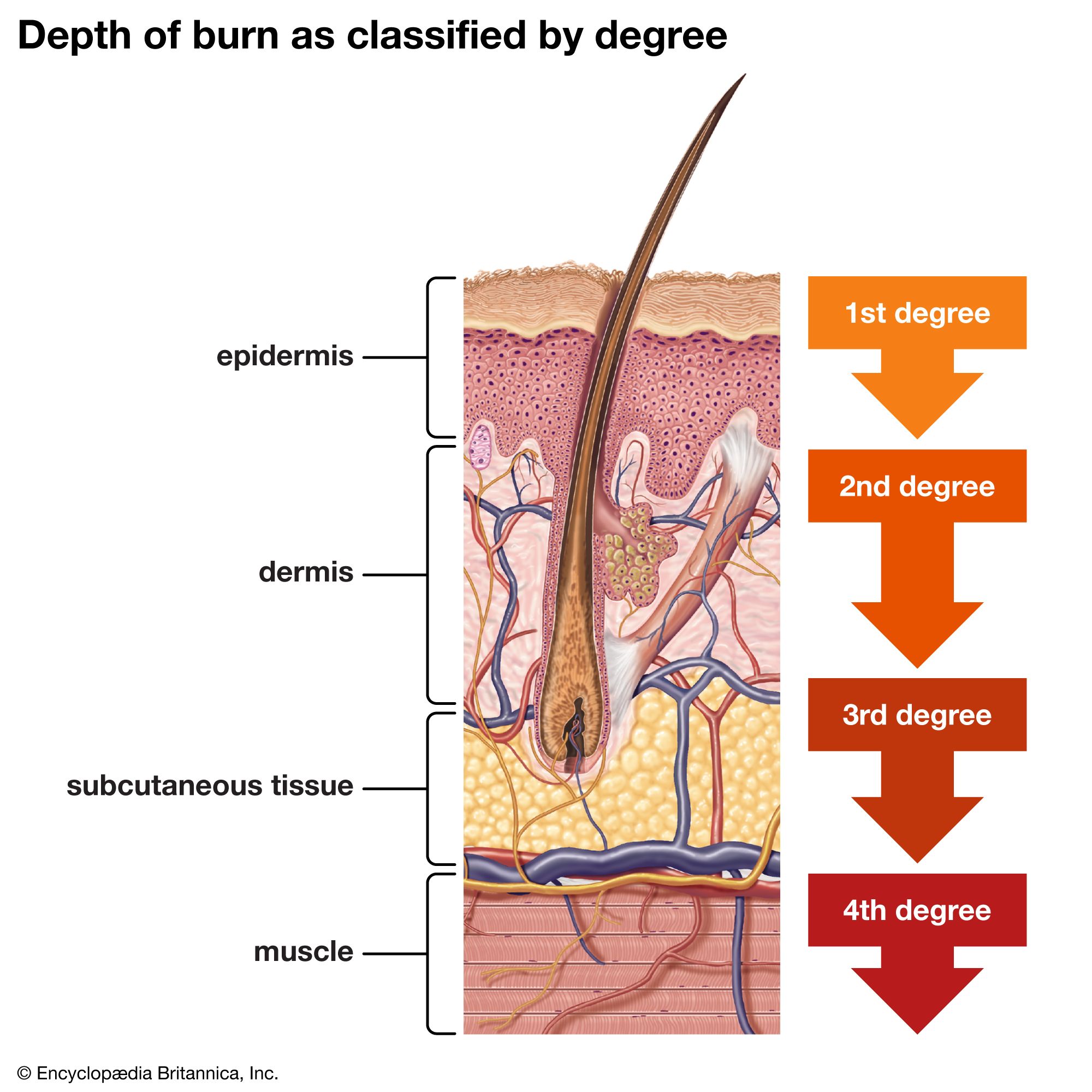
Second-degree burns form blisters because the injury causes damage that extends through the entire epidermis and into the dermis. This trauma leads to a separation between the layers of the skin—either within the epidermis or between the epidermis and the dermis—creating a space that fills with fluid.12
In the context of a second-degree burn, these blisters are accompanied by redness, pain, and edema, which is the swelling caused by the accumulation of fluids in the wounded tissue. The depth of the burn directly influences the prevalence of these blisters, which often increase in size during the hours immediately following the injury. While blisters are a hallmark of second-degree injuries, they do not occur in first-degree burns, where damage is limited to the epidermis and swelling is minimal.31